During the North American Division (NAD) president’s year-end meeting report on Oct. 30, 2025, division leaders announced a new two-year digital evangelism initiative designed to help local congregations reach their communities online through social media. The initiative was presented through a video report, and a series of remarks from Adam Fenner, Adventist Learning Community director and NAD vice president of digital media; Brent Hardinge, Adventist Connect director and assistant to the NAD vice president of digital media; Jose Cortes Jr., associate director of the NAD Ministerial Association; and Rohann Wellington, NAD Professional Services director and assistant to the NAD vice president of digital media. The presentation emphasized that digital outreach must lead to real-world spiritual impact.
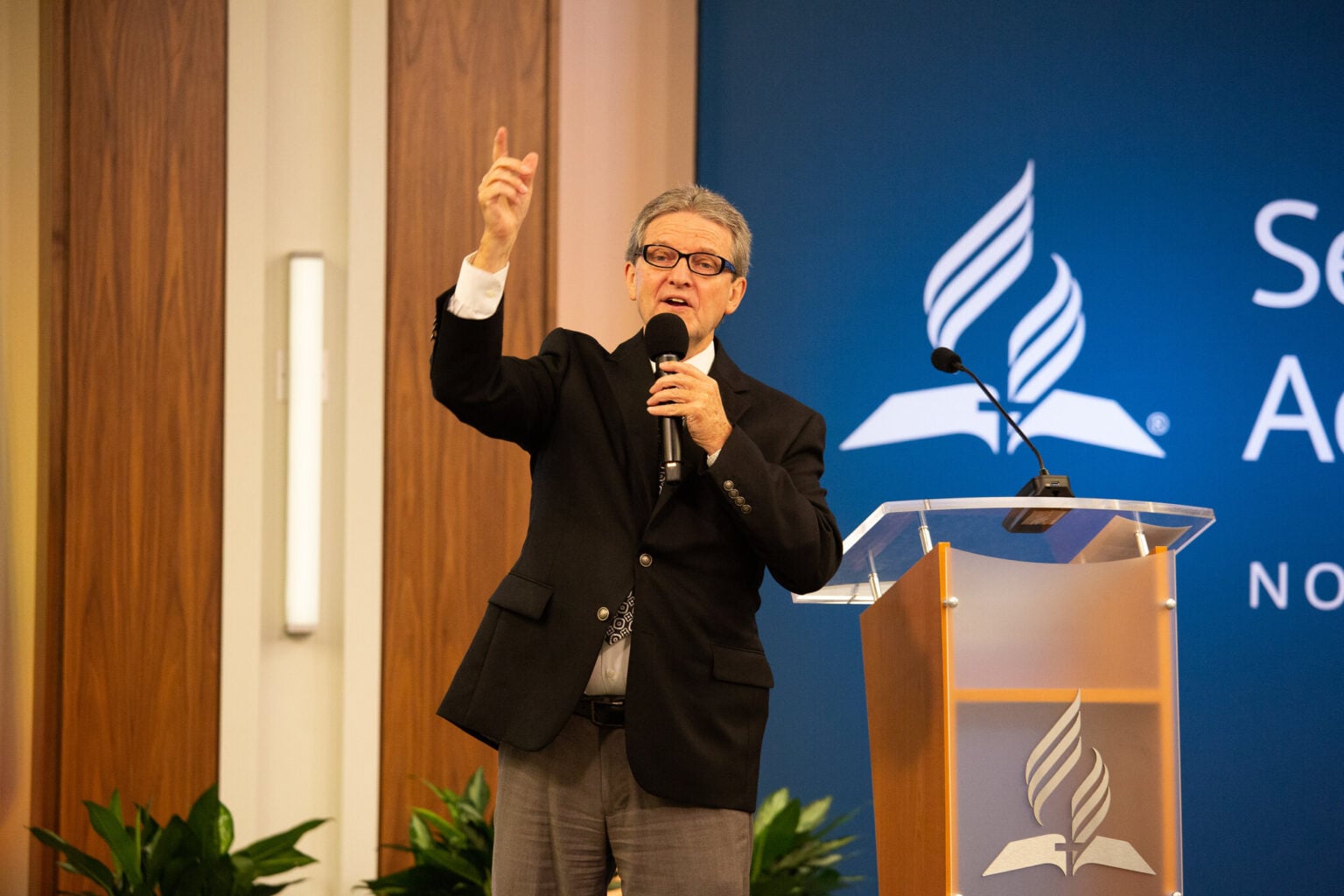
The segment opened with comments from Adam Fenner, who challenged attendees to rethink traditional metrics of online success.
“I used to think that getting 100,000 views on a video was awesome, that we hit it out of the park” Fenner said. “Now I look at that and I think, OK, how many baptisms does it have? How many people are in our faith communities as a result?”
In the video Fenner highlighted the need for churches to balance traditional outreach with digital engagement. “We need to equip local churches in such a way that they can help do that hybrid evangelism,” he said, explaining that the initiative includes tools to help churches build online connections that lead back to local congregations.
Next, Brent Hardinge outlined the initiative, a two-year effort to “help every conference empower one local church to reach its community online.”
Hardinge explained that the local church digital evangelism initiative is structured to help churches develop sustainable digital ministries. The program aims to train pastors, communication directors, and volunteer teams in digital content creation, analytics, and community engagement.
“This isn’t just another campaign,” Hardinge said. “It’s a framework for long-term digital ministry growth that conferences can replicate as they see fit. It’s not about technology. It’s about using every tool available to bring freedom, hope and wholeness in Jesus to a broken world.”
How the Three-Month Cycle Works
Hardinge described the initiative’s structured, three-phase training cycle that begins once conferences select their participating church.
“In the first phase, we will meet with the church, and begin training the church, the pastor, and the local member volunteers,” he said. This early stage introduces what digital ministry looks like and includes hands-on instruction in digital outreach, content creation, and community engagement. During this phase, churches also begin developing their digital ads in partnership with the North American Division and the Adventist Connect team.
Each participating church enters a guided three-month training and campaign cycle. It begins with workshops where pastors, communication directors, and local volunteers receive practical training, mentorship, and support. With guidance from trained mentors, each church then designs and launches its own digital evangelism campaign tailored to its local community.
In the second phase, the social media ads start running. “We’ll respond initially, and then meet with the local church to show them how these conversations are progressing,” Hardinge said. Throughout the campaign, Adventist Connect will provide weekly check-ins, analytics reports, and coaching to help churches understand what’s working and how to improve.
As online conversations deepen, Hardinge explained, the third phase focuses on transitioning digital interactions to local, personal engagement. Adventist Connect “begin[s] handing off those connections to the local members,” helping churches move seekers from online dialogue into “in person, face-to-face interactions.”
By the end of the three-month cycle, each church will have reached new people online and developed the confidence, systems, and long-term skills needed to continue digital ministry long after the initial campaign ends.
Hardinge also shared that the North American Division will “provide the financial support and coordination for this effort. This way each participating church will receive financial support to cover advertising, digital tools and training costs, thus removing the barriers and ensuring the church, regardless of its budget, can move forward.”
Prayerful Selection Needed
Fenner explained that this initiative is intentionally not for every congregation.” We already know how to generate digital interests. In fact, we can reach more people in a community than most churches can handle,” he said. “The real challenge and the real opportunity is to find churches where the pastor and members are united in prayer, open to the Holy Spirit’s leading and ready to engage personally with those God brings to them.”
He continued, “It takes discernment and balance between generating interest, qualifying leads and ensuring the local church can follow through with care, discipleship and authentic connection.”
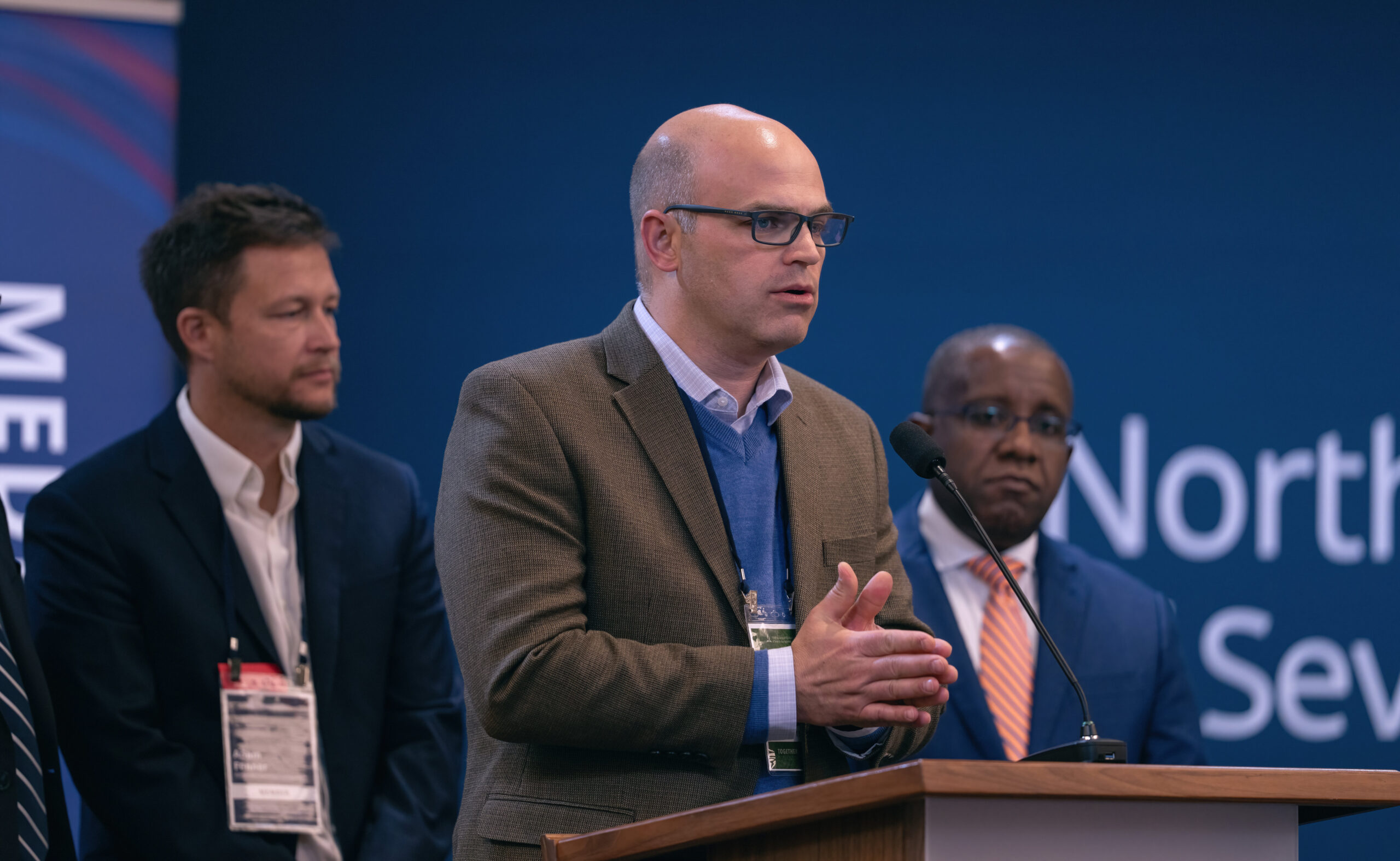
After the video, Cortes emphasized the point that not every church is ready to participate—and that readiness is spiritual, not technical. “This is not an endeavor where one size fits all,” Cortes said. Some churches, he noted, “may not be positioned or ready to engage at this moment, and that is OK.”
His challenge to conference leaders was to prayerfully identify congregations “that best reflect the Spirit of Christ, the beauty of Christianity and the hope of Adventism—churches that have a drive for growth, for discipleship, for loving people, for compassion and for multiplication.”
Coordinated Digital Mission
Wellington underscored the need for a dedicated person at each church to manage online interest and nurture individuals into local engagement.
“People are searching for hope and the missing link … is establishing a person who will be responsible for moving that online engagement,” a digital mission coordinator, explained Wellington, that would help move individuals “from the online experience … to the pool and into the membership.”
He stressed that success depends on collaboration, saying, “It will not be successful unless the church leadership and the membership are working in collaboration to accomplish the mission.
“Remember, technology does not drive mission. Mission drives technology,” Wellington added.
The goal is long-term replicability. “This is an ongoing initiative that we can hopefully train more churches to replicate success and bring more people to Jesus,” Fenner concluded, encouraging those gathered to scan the QR code on the screen to start the process.