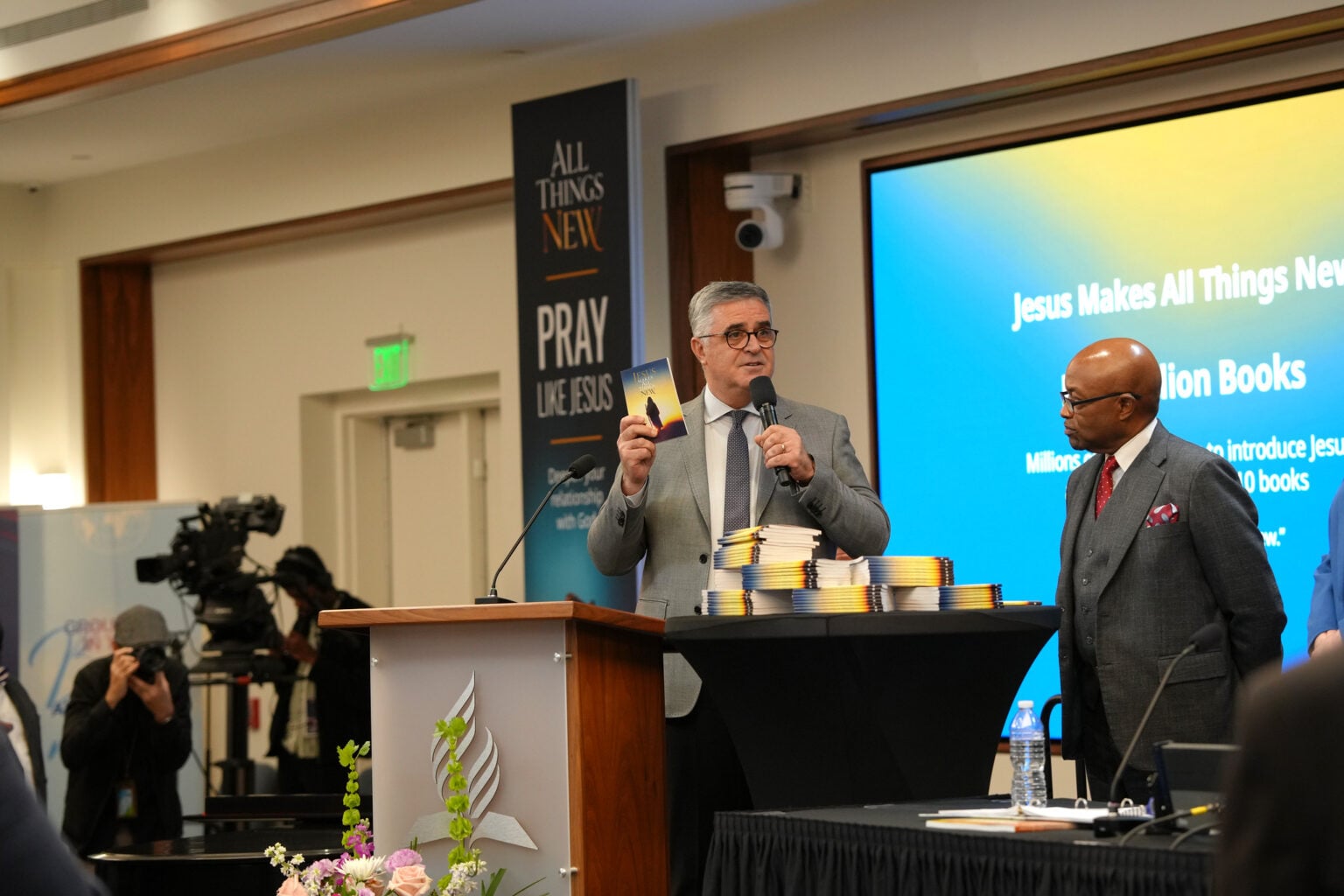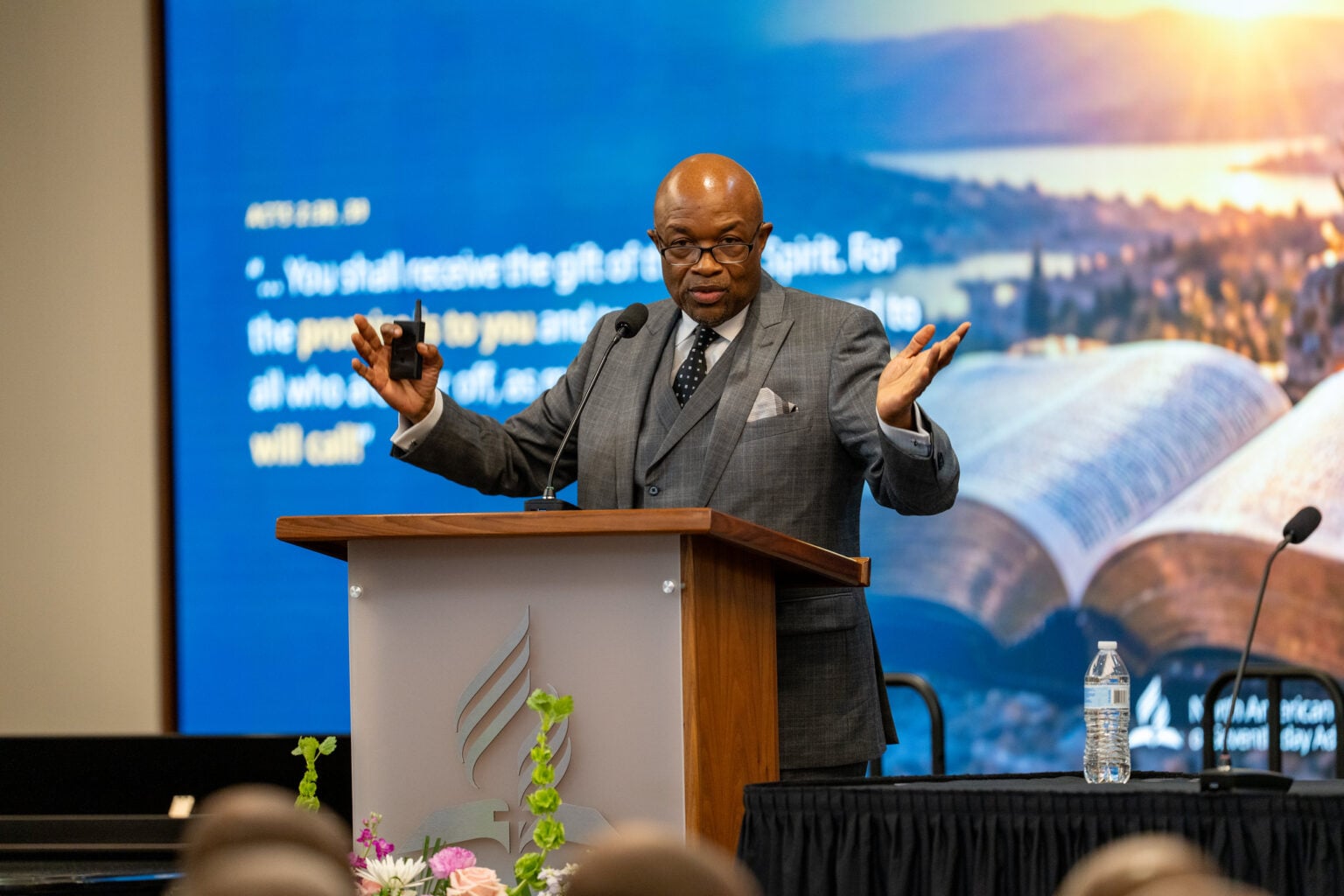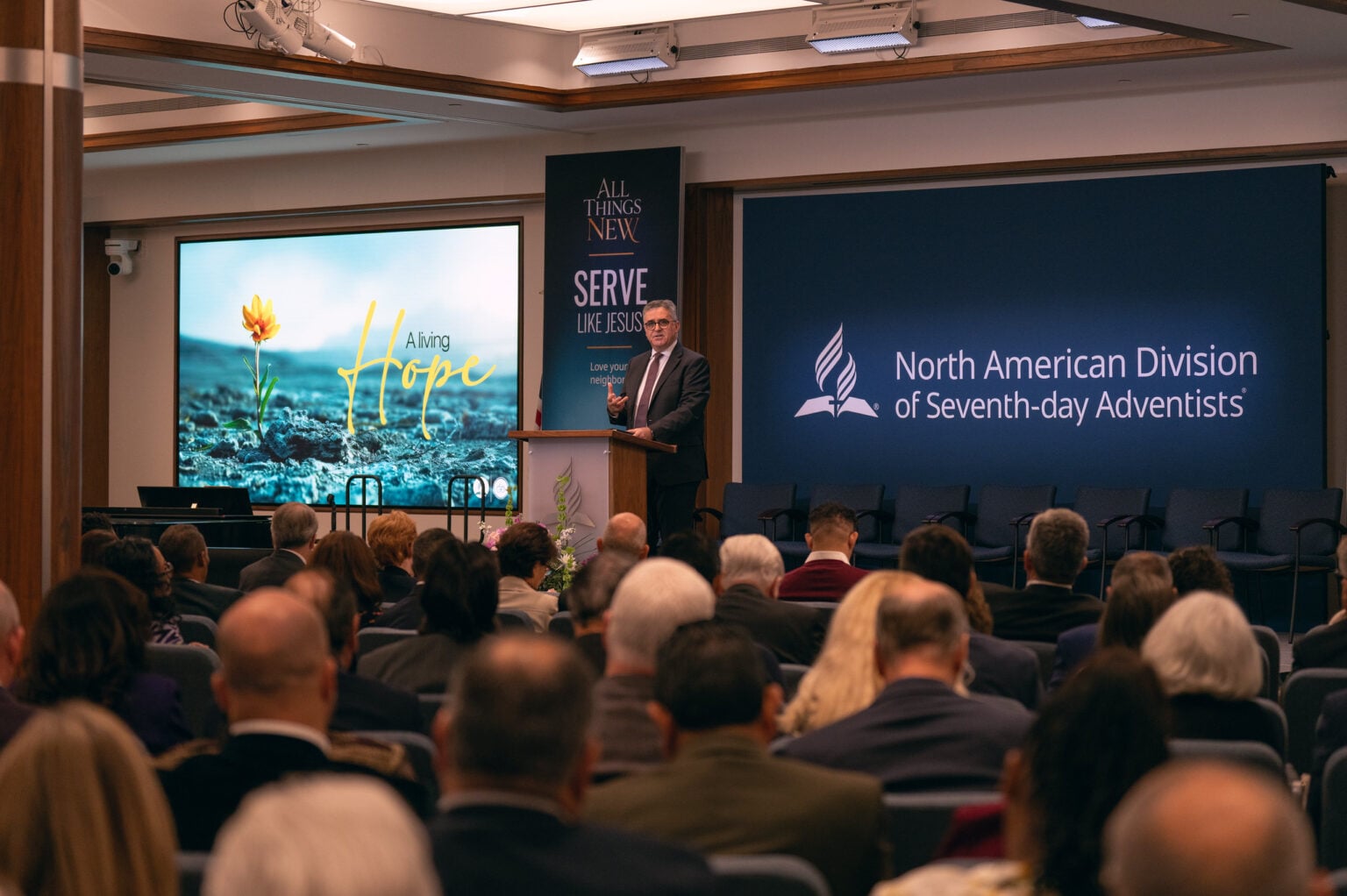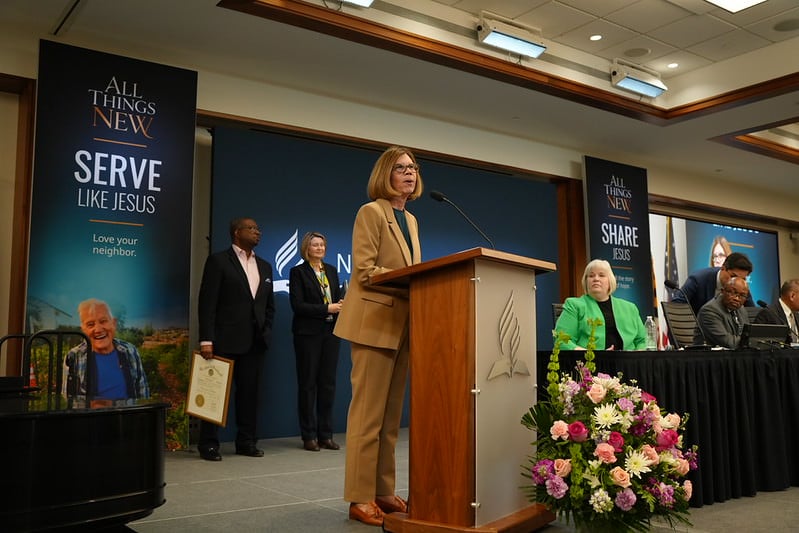
An offering appeal that began during the Sabbath morning worship service of the 2026 North American Division Annual Council has raised more than $12,000 to date to support mission and ministry efforts among the Indigenous peoples of northern Canada. Delegates and visitors from across the division joined together to make personal donations of thousands of dollars. This amount was matched by the North American Division.
After NAD treasurer Judy Glass moved the group with her description of the special challenges of this remote region and the historical trauma of Indigenous communities in the territory of Nunavut, the leaders of the General Conference, who were also in attendance, pledged on the spot that the General Conference would match the mission offerings given that day, thus bringing the total amount donated to more than $12,000.
[If you would like to join this effort, this offering is now an option on AdventistGiving in the World Offering section. Find full instructions at the bottom of this article.]
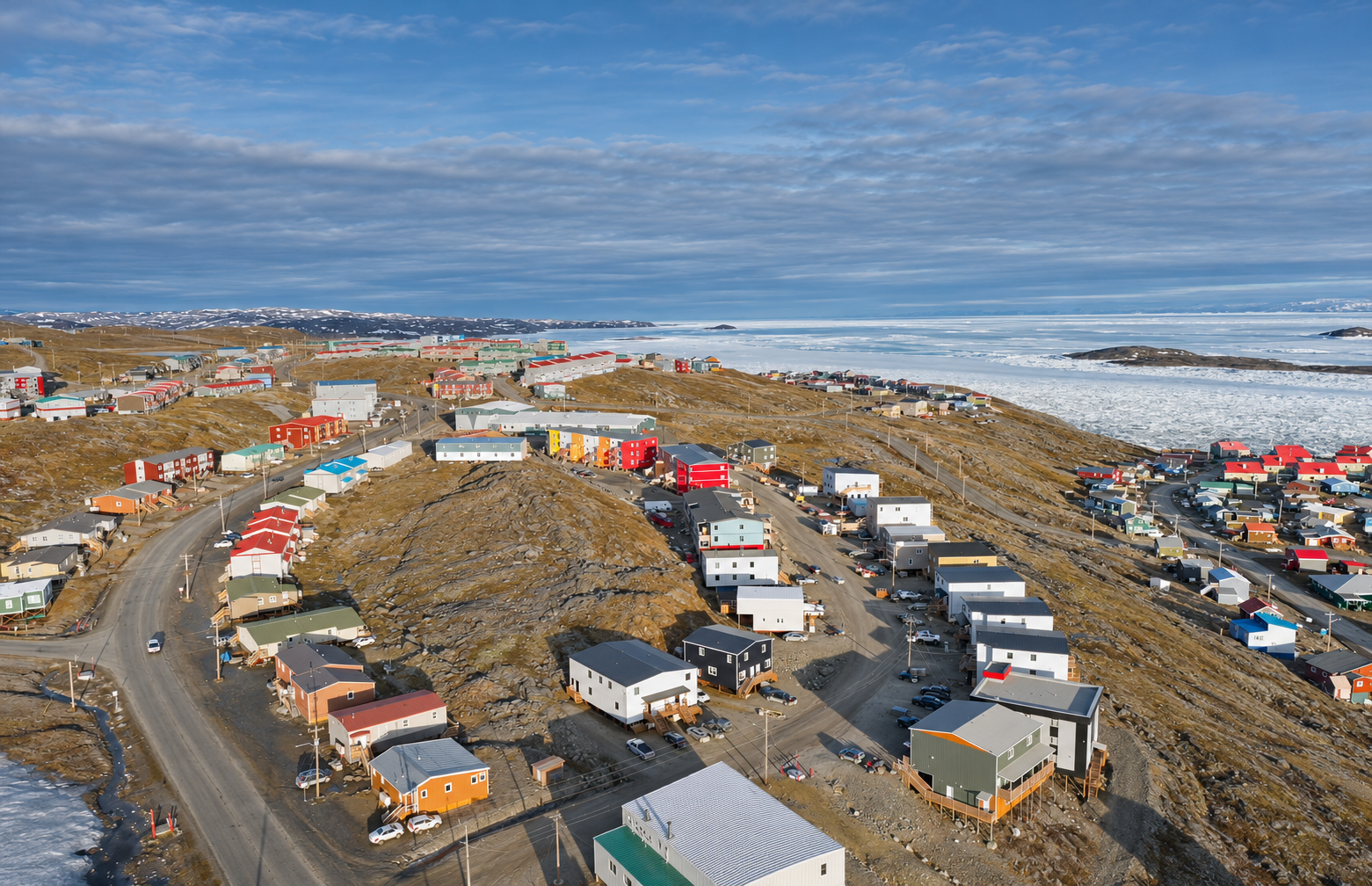
Nunavut is the largest, most northern territory of Canada. A part of the Canadian Arctic, larger than Alaska. To picture Nunavut’s size, imagine 10 adjoining states stretching from California across the Midwest to Pennsylvania.
Yet only about 41,000 people live there. About 85 percent of these are Indigenous Inuit People, many living in communities that no roads connect. Statistics Canada, Canada’s national statistics agency, found that in 2022, 82 percent of Inuit children aged 1 to 14 in Nunavut lived in households that experienced food insecurity.
Glass shared that these children and their families are where the Seventh-day Adventist Church is learning to enter as guests, in a region hurt by colonialism brought in the name of Jesus.
For decades, residential schools run by the Canadian government and Christian churches separated Inuit children from their families and suppressed their language. Inuit children began being forced into residential schools in large numbers in the 1950s, and Nunavut had 13 of these schools. Nunavut’s last residential school did not close until 1997.
In those same years, tuberculosis spread across the Canadian North. A Canadian government ship sailed to the Arctic each summer, and those found sick were kept on board and taken south, often with no chance to say goodbye. By 1956, about one in seven Inuit was in treatment in southern Canada. Many never came home, and many families were never told what had happened to their loved ones. Sled dogs were killed, families were moved by force, and many other wrongs were inflicted. The Government of Canada has since apologized for these wrongs and has given the Inuit self-governance of this territory.
After a history like that, trust is understandably not given quickly. Glass reported that today in Iqaluit, the capital of Nunavut, the Seventh-day Adventist Church is serving children and their families through its Pathfinder and Adventurer youth clubs, and the community is helping to teach them.
The fire department taught the Pathfinders the fire safety honor and handed out the honor patches. An Inuk woman did the same when she taught them to make bannock, a traditional bread. Katelyn, an Inuk mother who brought her daughter to Adventurers, has become an instructor.
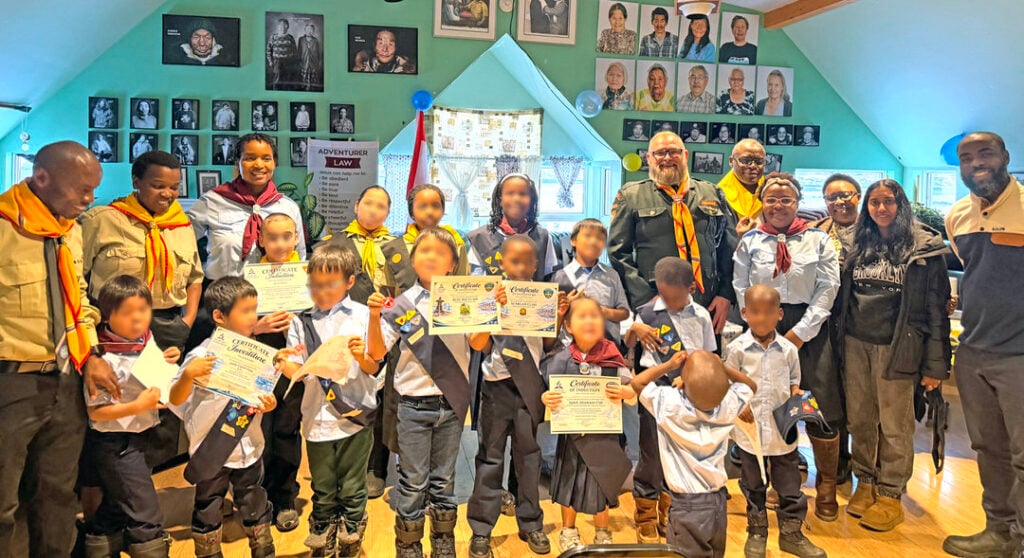
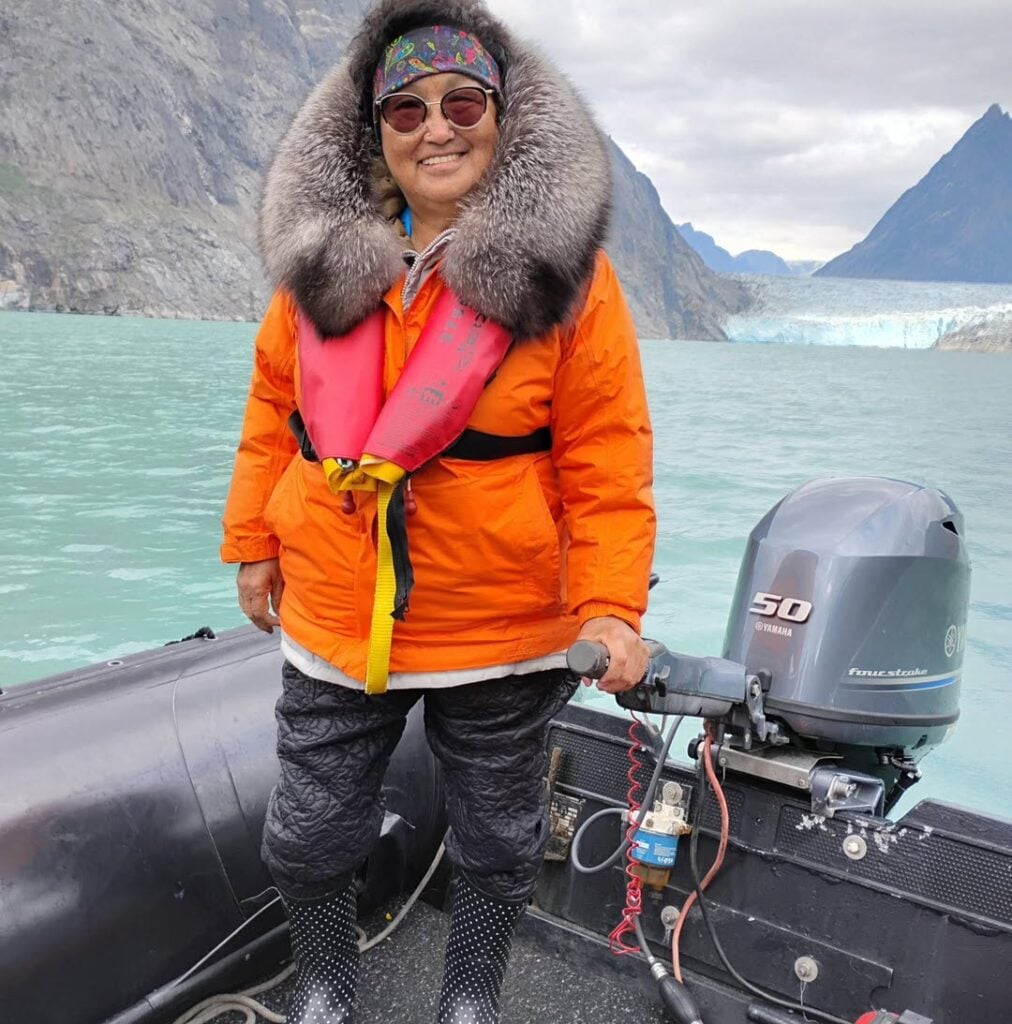
An Inuk Elder, Annie, has proposed that Elders in the community teach Adventurers the Inuktut language and culture through songs. The Pathfinders will also learn traditional stitching and weaving with wool from the musk ox, a large bison-like animal that roams the Canadian Arctic.
The Seventh-day Adventist Church has one pastor serving this massive region, and there are currently only 13 official church members. David Bakunzi, the Manitoba-Saskatchewan Conference’s mission coordinator in Nunavut, and the 13 church members, are working diligently to share our message of hope and wholeness through Jesus.
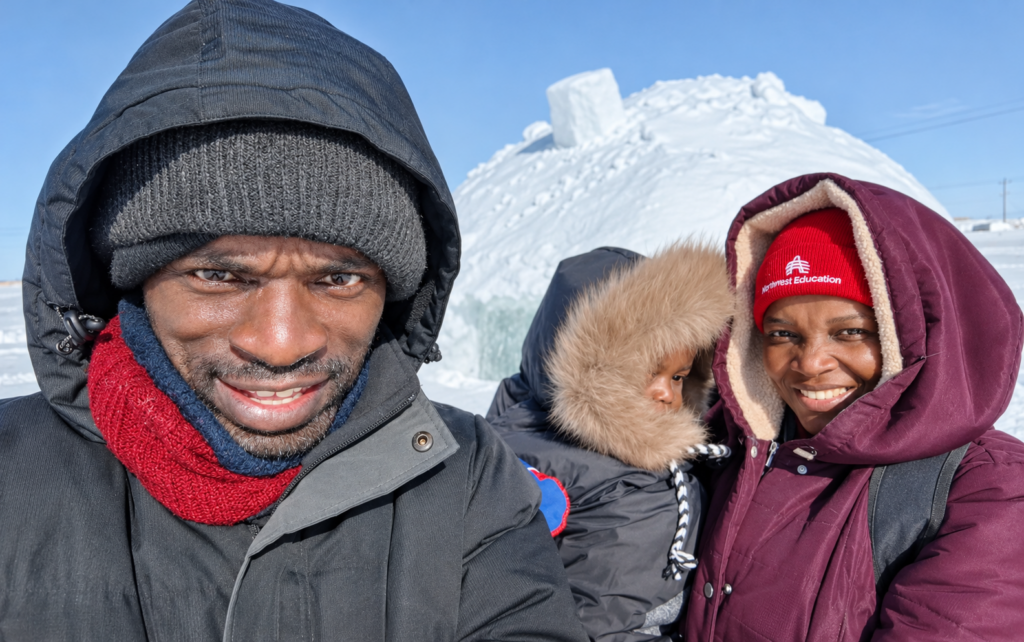
Worship is livestreamed to members in four surrounding communities, with one member serving 930 miles away, by the Arctic Ocean.
The Manitoba-Saskatchewan Conference is committed to building of a community of faith that is “led by Inuit, for Inuit.”
The Annual Council Nunavut Work offering goes toward this ministry with children and families in Nunavut, through the Pathfinder and Adventurer clubs. “The relationships that Pastor Bakunzi and his family are developing are rebuilding trust with Inuit people,” said Charles Ed II Aguilar, president of the Manitoba-Saskatchewan Conference.
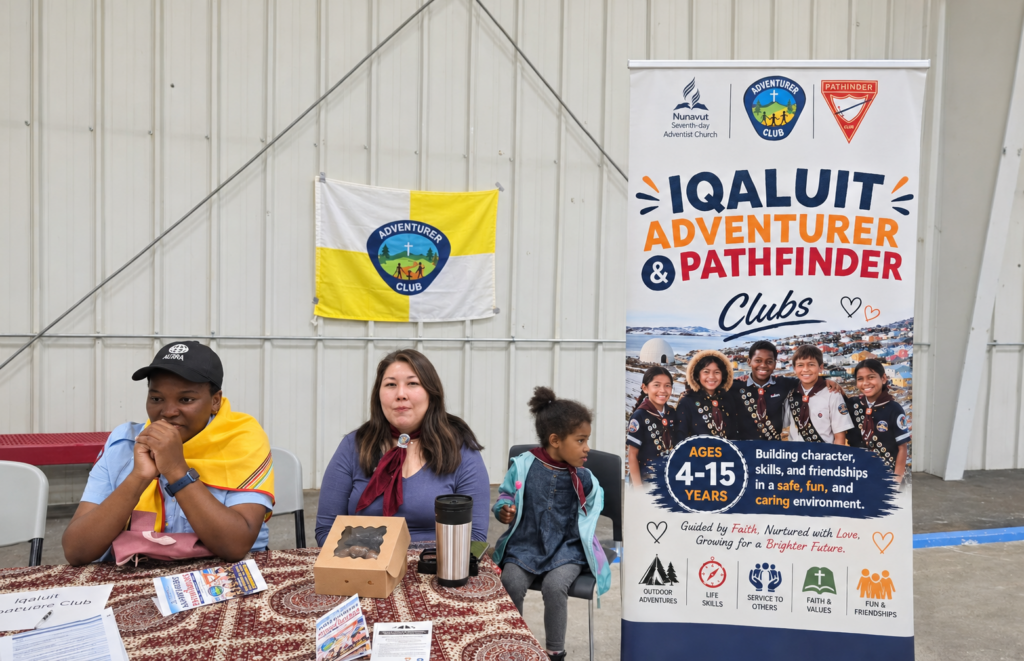
As she closed her offering appeal, Glass said, “When I was growing up, my mom would often read us stories about the missionaries overseas. Pastor Bakunzi and his family are missionaries within the North American Division. Imagine with me how excited an Inuit child in Iqaluit will be receiving her first [Pathfinder] patch from an Elder, in her own language.”
Glass called on the group to join her in giving to support the people in Nunavut, saying, “The residential schools operated by the Canadian government and Christian churches broke the trust of the Inuit people and separated their families. Our church now has the opportunity to care for the well-being and culture of this people group. Let us be a church where the love of Jesus makes us worthy of that trust.”
AdventistGiving Instructions: AdventistGiving is the secure, online platform for tithes and offerings to the Seventh-day Adventist Church. To give to the work with the people of Nunavut,
- create or login to your account,
- select ‘New Donation’
- scroll down to ‘World Offerings’ on the bottom left of the page and select ‘NAD Annual Council Project.’