As communities across the Southwest recover from recent rounds of flooding, North American Division Adventist Community Services (NAD ACS) is working with local leaders to identify needs and coordinate assistance in Arizona, Colorado, and New Mexico.
According to a Nov. 4, 2026, report from W. Derrick Lea, NAD ACS executive director, division and local ACS leaders met Nov. 3 to discuss how to coordinate resources for affected communities. The discussions involved the Mid-America, Southwestern, and Pacific unions.
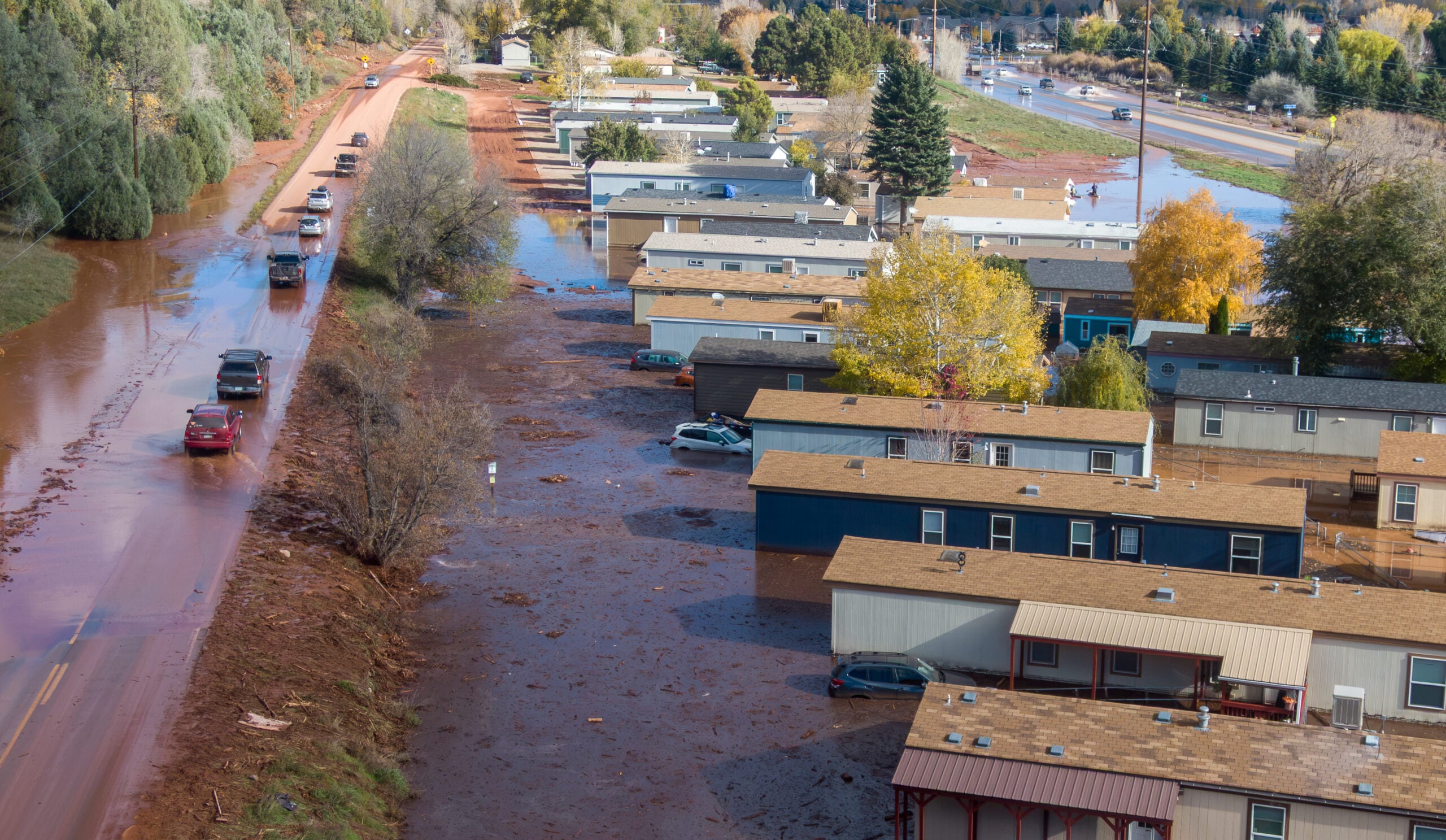
Heavy rain in late October and early November brought renewed flooding to communities already dealing with storm damage. The Associated Press reported Nov. 1 that evacuations were ordered in Pagosa Springs, Colorado, and Sedona and Camp Verde, Arizona. In northern New Mexico, additional flooding prompted evacuations near the San Juan, Animas, La Plata, and Chama rivers, according to a Nov. 3 report carried by KANW.
Damaged roads and bridges have complicated access across the region. The Colorado Department of Transportation reported Nov. 3 that U.S. Highway 160 sustained damage at several locations between Durango and South Fork, including collapsed support piers at the Piedra River Bridge west of Pagosa Springs. In Arizona, Coconino County declared an emergency Nov. 3 and reported that food and supplies were being delivered to homes whose access was blocked by debris and damaged bridges.
The Arizona Conference is developing a process to receive requests from residents and connect them with organizations able to help. Diné Adventist Radio, which has an estimated reach of close to 100,000 people across the Navajo Nation, is expected to serve as an initial point of contact for individuals and families affected by the flooding.
Under the proposed process, residents would be able to communicate needs for drinking water, food, temporary shelter, clothing, essential supplies, and other disaster-related assistance. Requests would be collected and forwarded for coordination and follow-up.
Eric Bahnmiller, pastor for Diné Adventist Radio and the Window Rock Seventh-day Adventist congregation in Arizona, would review incoming requests, assess their urgency, and help identify the organization best positioned to respond. Arizona Voluntary Organizations Active in Disaster (VOAD) would be the first avenue for connecting requests with established disaster response organizations. Needs better suited to Adventist resources, or those that could not be met through that network, would be referred to the appropriate Seventh-day Adventist conferences and ACS partners.
“The objective is to make effective use of available resources, prevent duplication of services, and ensure requests receive follow-up,” Lea shared in his Nov. 4 update.
The report also proposes coordination with emergency management agencies and the appropriate ACS and VOAD partners in Colorado and New Mexico.
Each participating conference is expected to work with the Arizona coordination team and partners in its own territory to determine how best to assist locally.
To learn more about ACS disaster response or to support its work, visit communityservices.org.