How do the different levels of the Seventh-day Adventist Church work together to fulfill its mission? How should tithe move through that system? And how can the church provide services and resources efficiently while strengthening ministry in local conferences and congregations?
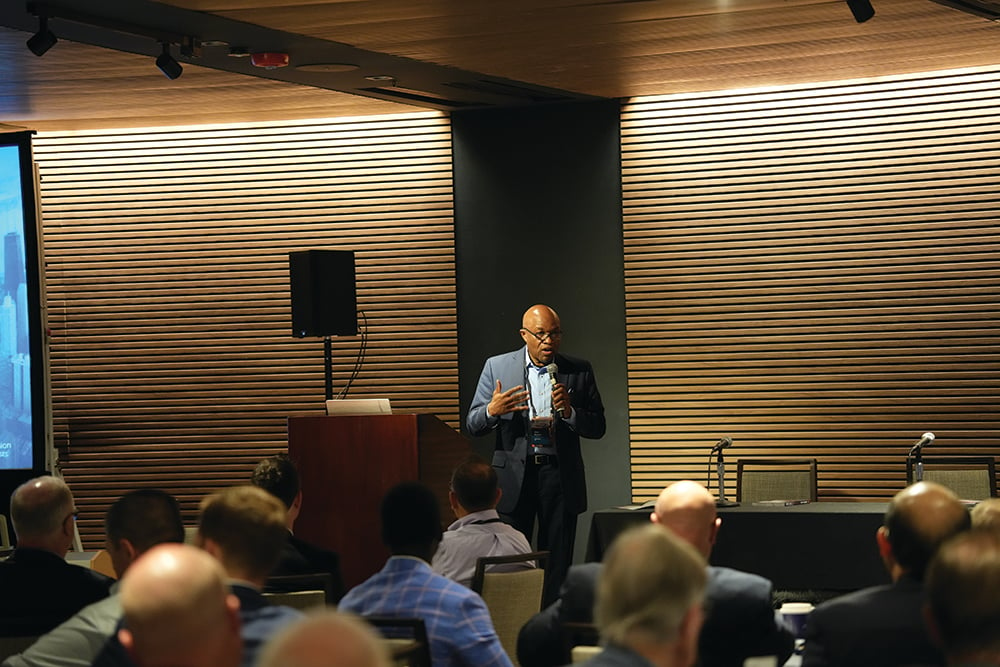
Those questions brought approximately 200 conference, union, and North American Division (NAD) administrators to Chicago, Illinois, September 30-October 1, 2026, for worship, prayer, presentations, and discussion about tithe sharing, organizational responsibilities, and the use of church resources to support mission.
Recognizing that the stewardship of tithe is a sacred responsibility, NAD leaders convened the meeting as a proactive step toward establishing a shared understanding of how tithe moves through the church. The meeting also sought feedback on near-term financial needs and possible long-term directions, including whether current organizational and funding models are sustainable and how responsibilities might be streamlined or better aligned with mission. Designated discussion periods allowed administrators to relate the information presented to conditions in their territories and identify areas needing to be addressed.
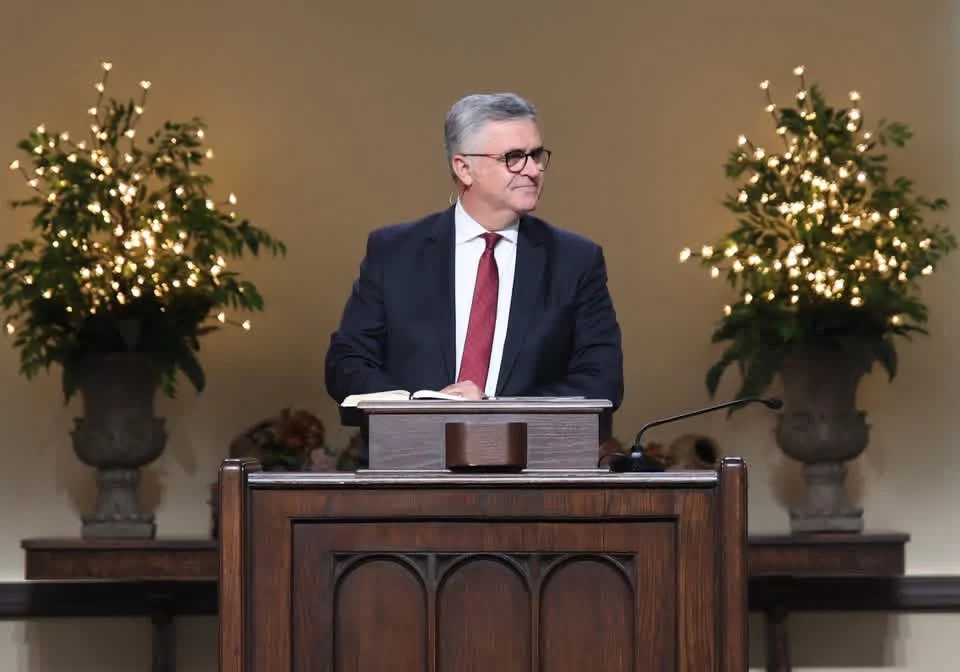
Both mornings began with worship and prayer. Randy Roberts, Loma Linda University church senior pastor, emphasized that while the gospel remains constant, methods and structures used to advance it may need to change. On the second day, Tricia Payne, Lake Region Conference Ministerial associate director, reminded participants that mission requires more than planning, resources, and organizational ability; it also requires the power and guidance of the Holy Spirit.
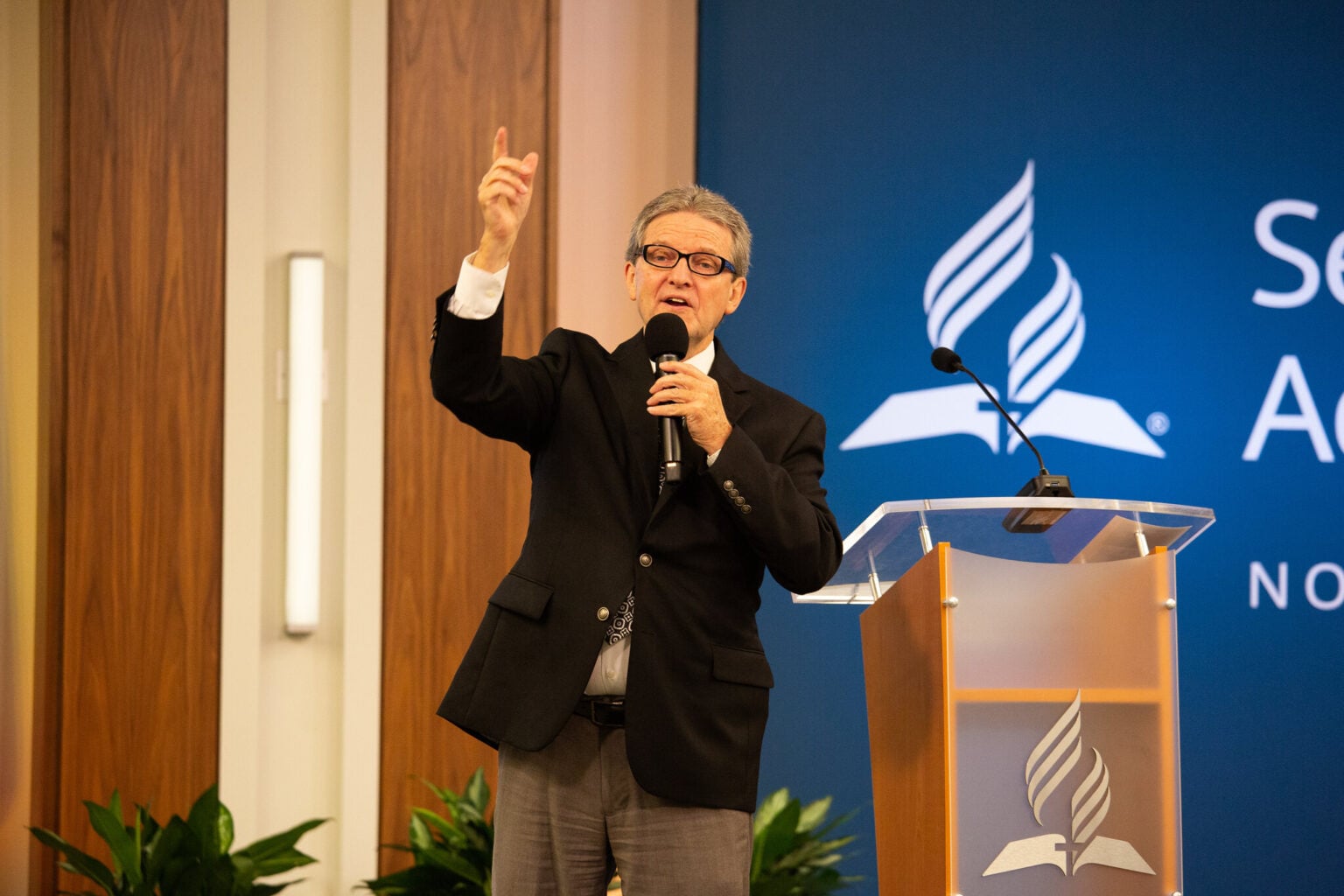
In his opening remarks G. Alexander Bryant, NAD president, noted that most attendees had entered their current roles during the past four years. Only 28 had attended a similar administrators’ meeting near Dulles, Virginia, in 2014, and just 15 remained in the same positions.
Bryant said NAD officers had met with leaders union by union before convening the Chicago gathering, and were moved by what they heard about the needs of conferences. He also emphasized that questions surrounding tithe sharing must be considered within the larger mission of the church. While leaders may discuss whether current percentages should be adjusted, he said, those conversations should begin with an understanding of why tithe is shared.
Understanding Tithe Sharing
Unlike systems in which most funds remain with an individual congregation, the Seventh-day Adventist Church identifies the local conference as the storehouse for tithe. Conferences retain the majority and remit portions to the union, NAD, and General Conference. These resources support ministry within North America and around the world.
The principle is larger than a financial transaction in which each congregation or organization receives services equal to what it contributes. Resources are shared so that stronger congregations and territories can help support ministry in places with fewer resources and so the church can accomplish work beyond the capacity of one congregation or conference.
“The strong help those who are weak, and together the work overall is strengthened with increased accountability,” said Michael W. Campbell, NAD Archives, Statistics, and Research director.
Campbell traced how Adventist organizational and financial systems have changed during periods of growth, constraint, and experimentation. He emphasized that the church has repeatedly adapted its methods as needs arose, while keeping mission central.
Judy R. Glass, North American Division treasurer and chief financial officer, explained how tithe is distributed and supports ministry. She reported that in the 2026 gross distribution, conferences retain 78 percent of tithe, unions 8.1 percent, the NAD 10.9 percent, and the General Conference 3 percent. Those figures precede retirement contributions and, in the NAD’s case, the return of education and evangelism funds and other appropriations, which means that of the 10.9 percent, more than 7 percent of it is given back to conferences and other entities.
Glass explained how the NAD’s 10.9 percent portion supports retirement obligations, education and evangelism funds returned to the field, appropriations to institutions and ministries, and NAD operations and shared services. Those shared services include systems for online giving and membership management, ministry resources, education, religious liberty, community services, disaster response, technology, and other functions that would be difficult or inefficient for each conference to provide independently.
Leaders also received results from the 2026 NAD Organizational Effectiveness Survey. Its 725 responses, representing all nine unions, affirmed the importance of the NAD’s major functions while calling for clearer roles, less duplication, greater transparency and accountability, and more support directed toward the local church.
Considering Change
Administrators considered changes that could provide near-term help and broader questions requiring additional study. They examined the education and evangelism funds that currently move through the NAD and return to unions for those designated purposes. Most union groups favored keeping those funds closer to the local field, although participants expressed differing views about how the money should be designated and protected.
Kyoshin Ahn, NAD executive secretary, reviewed similar discussions that began at the 2014 Dulles meeting. That work considered ways to streamline operations, eliminate unnecessary duplication, reconsider tithe distribution, and examine how organizational structure affects mission. The NAD Executive Committee took action in 2015 to continue that work, but Ahn reported that the broader recommendations did not advance in 2016 after administrators indicated they were not ready to proceed.
During the second day, General Conference treasurer Paul H. Douglas reviewed biblical principles and General Conference Working Policy governing tithe. He reiterated the local conference’s role as the storehouse and tithe’s primary purpose of supporting gospel ministry. After hearing concerns about the financial challenges facing Adventist education, Douglas said he would take a request for renewed study of the policy governing tithe use for education back to the General Conference.
Administrators also considered examples of possible organizational efficiencies and ministry approaches. Doug Bing, North Pacific Union Conference president, described studies underway in that union on organizational structure and the financing of Adventist secondary education. Leslie N. Pollard, serving as an NAD consultant for pastoral continuing education and mission, and Ismael Castillo, Texas Conference president, discussed the use and support of trained volunteer lay pastors as one way to extend pastoral care and involve more members in mission.
Throughout the meeting union discussion groups emphasized the importance of clarifying responsibilities, reducing unnecessary duplication, and determining which services can be shared efficiently and which ministries should remain close to local churches and communities.
Next Steps
The Chicago gathering was a consultative rather than a decision-making body. It did not vote policy changes or approve a final financial recommendation. Instead, the discussions provided direction for proposals that must be developed and considered through the church’s established governance processes.
Near the conclusion of the meeting, Bryant presented four next steps that had emerged from the discussions:
- Providing additional financial assistance from the NAD and unions to conferences, with a proposed effective date of January 1, 2027.
- Forming a committee representing all levels of the church to study organizational efficiency, reduce duplication, and streamline operations.
- Forming a committee representing all levels of the church to study organizational restructuring.
- Beginning the established process for changing tithe reversion policies totaling 3.85 percent of tithe.
NAD officers will work with union leaders on the conference-assistance proposal and share it with administrators before the 2026 NAD Year-End Meeting, scheduled for October 29-November 3 at the division’s headquarters in Columbia, Maryland. Any recommendation requiring action will be considered by the NAD Executive Committee.
Bryant said that the longer-term process is expected to include outside consultation, representative committees, reports to administrators in summer 2027, a framework for streamlining organizational roles and functions later that year, and a proposed restructuring framework in summer 2028.
He emphasized that adjusting percentages and organizational structures alone will not address the church’s long-term needs. Financial and structural work must remain connected to mission, church growth, discipleship, and the involvement of lay members.
“If there’s going to be significant change, it’s going to require everybody in. It’s going to require all of us,” Bryant said.
He added, “We will try to advance these discussions . . . into action. We can’t do it by ourselves. We all must do it together.”