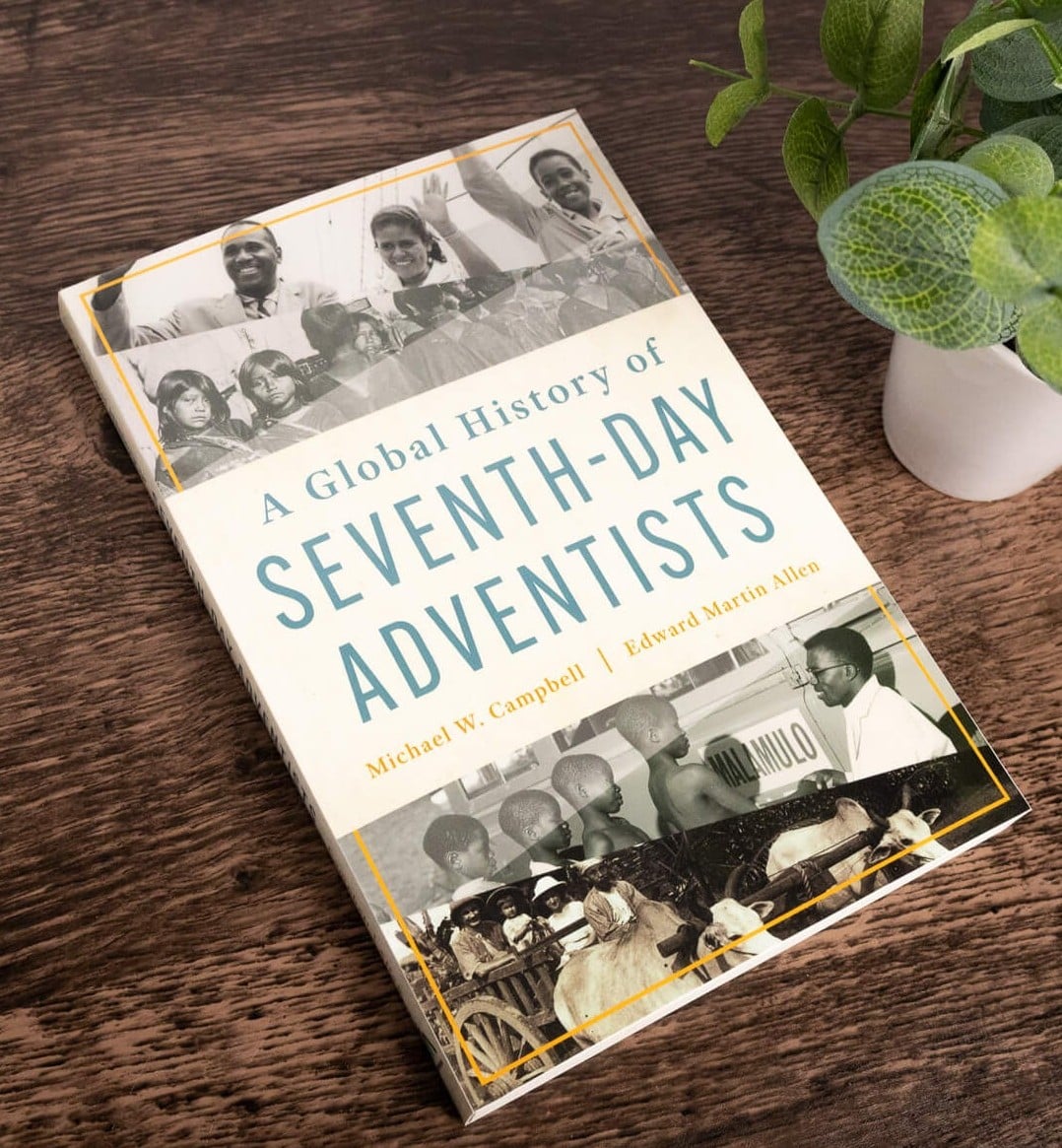
It started with a seat assignment. In November 2019, Edward Martin Allen boarded a flight from Omaha, Nebraska, to San Diego, California, settled in, and realized his seatmate happened to work for major Christian publisher Wm. B. Eerdmans. Two and a half hours later, Allen had a business card and an invitation to bring his co-author, Michael W. Campbell, Ph.D., to discuss publishing the book on the history of Seventh-day Adventists that Allen and Campbell had been working on together.
Close to a decade of research, writing, and collaboration later, A Global History of Seventh-day Adventists is now available worldwide at major online book sellers, such as Amazon, and in assorted local bookstores. It is designed to be engaging and understandable to multiple audiences, including church members curious about their own heritage, readers with no prior knowledge of Adventism, and university students studying religious history. The book contains almost 100 photographs, text boxes on a wide range of topics, and discussion questions designed for classroom use.
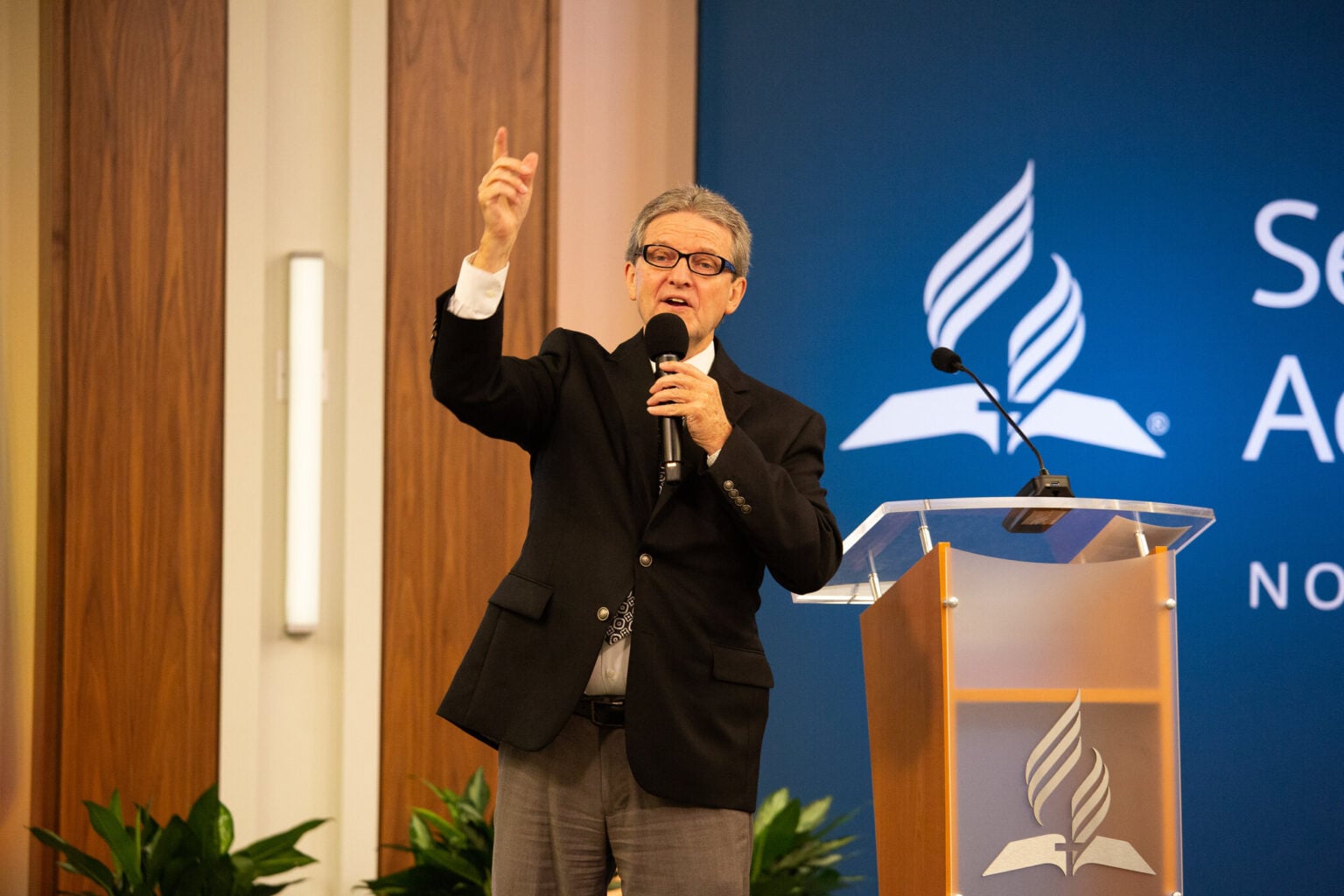
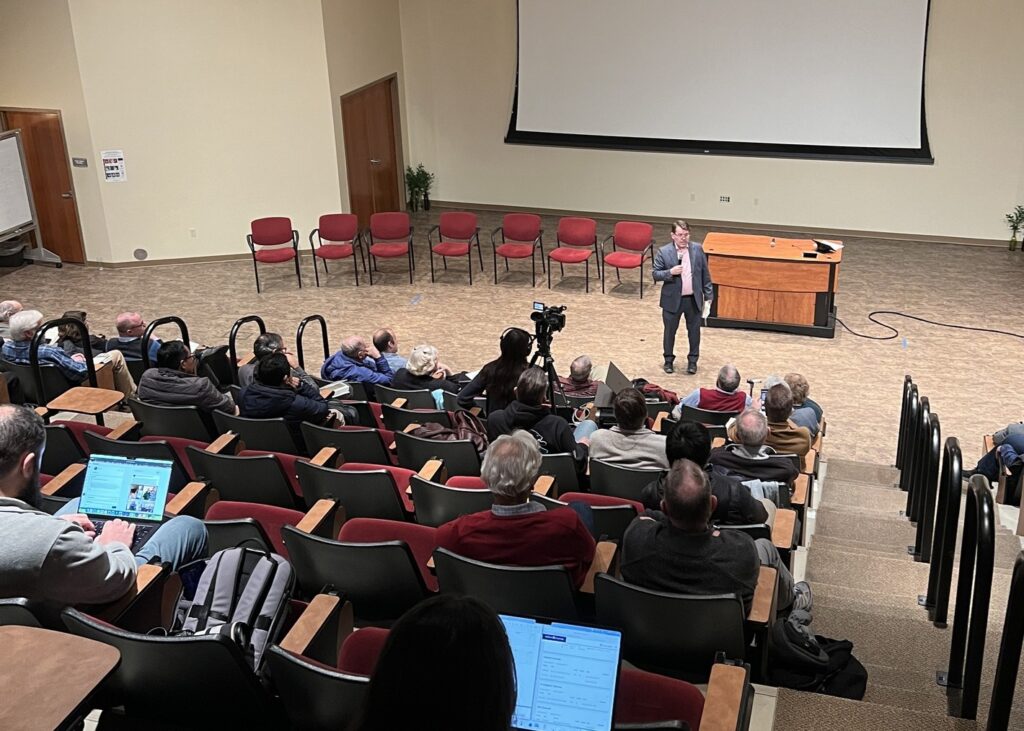
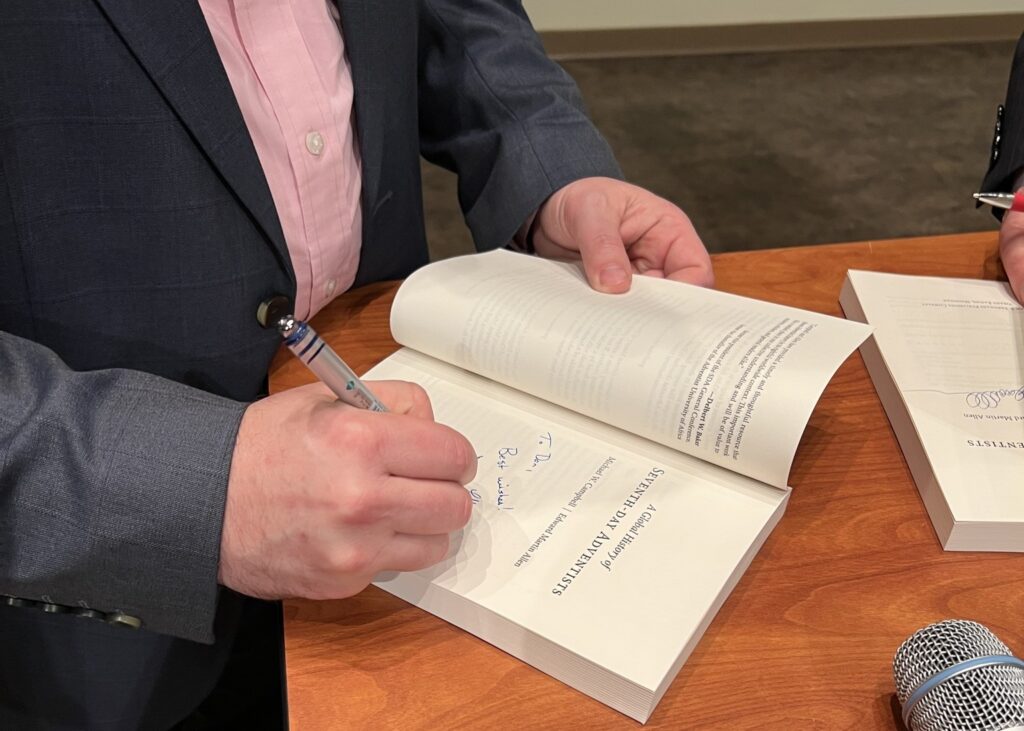
A Global History was launched in February by the Center for Adventist Research at Andrews University in Berrien Springs, Michigan, in a special live-streamed evening program hosted by widely-known Adventist pastor Dwight K. Nelson and attended by numerous scholars, church leaders, Eerdman’s Publishing staff, and other interested persons.
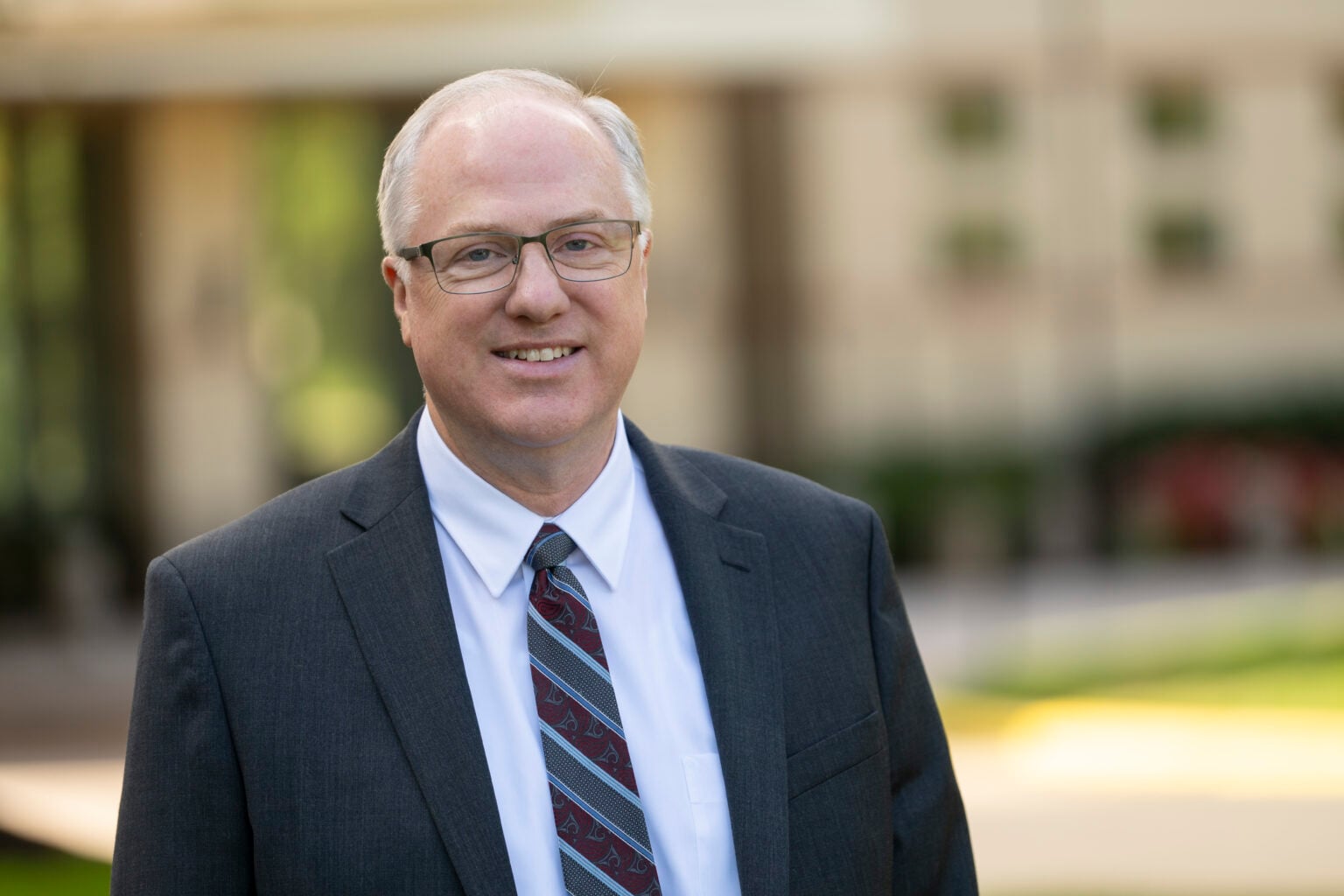
Campbell is director of the North American Division Department of Archives, Statistics, and Research, an ordained Seventh-day Adventist Minister, prolific author, and previous teacher at the college and university level. Co-author Edward Martin Allen is professor emeritus of religion at Union Adventist University in Lincoln, Nebraska. During his career at Union, he served as academic dean and director of the school’s religion program.
What distinguishes this volume from previous Adventist histories, according to Campbell and Allen and the scholars who reviewed it, is its genuinely global scope. Earlier comprehensive histories of the church have largely centered on North American origins. This book follows Adventism across centuries and continents, setting the denomination within the broader currents of world history.
Allen illustrated this with the story of Fernando Stahl, a missionary whose educational work among Indigenous communities around Lake Titicaca in Peru ultimately helped transform the country’s separation of local people from wider participation in their society. Today, Stahl is the only North American with a statue in Peru.
The book also examines how the world has shaped Adventism. Allen described how the early 20th-century Student Volunteer Movement for Foreign Missions (an interdenominational initiative that sent 20,000 missionaries overseas between 1890 and 1920) inspired many Adventists and even shaped the church’s practice of morning devotions.
“Adventism didn’t occur in a vacuum,” said Rodney Palmer, chair of Andrews University’s Department of Religion and Biblical Languages, during the panel discussion that followed the launch presentations. “Putting Adventism in context and showing how events happening around it shaped it is very helpful.”
Both authors and the Eerdmans editors emphasized the commitment to honest historiography that guided the project. Campbell noted that the book does not shy away from difficult topics, including the Adventist Church’s relationship with the Third Reich, and ongoing debates about women’s ordination.
“We write the history that we actually did find in the archives,” Campbell said, “not the history that we wish we had found.”
James Ernest, Eerdmans’ executive vice president and editor in chief, reflected on this tension in his remarks. He cited a distinction the book itself draws between historiography and hagiography; the difference between telling the truth about a people and merely celebrating them. “In your writing, it’s very clear that you love the subject of your writing,” he told the authors. “But you tell it in love. You don’t have to pretend that anything was not like it was.”
The book also makes a deliberate effort to tell the stories of ordinary believers and underrepresented voices, including women whose contributions to Adventist mission have rarely appeared in historical accounts. Campbell described his discovery of Carmen Vaca, an Indigenous woman in Peru who baptized approximately 40 people in a single year; a story he found in one photograph and a single short article.
“Just because you don’t know their story doesn’t mean they didn’t exist,” Campbell said. “That’s the responsibility of a new generation of historians, to go back and look for those stories.”
The panel of Andrews University scholars expressed enthusiasm for adopting the book as a classroom text. Associate professor of Religion Erhard Gallos called it “updated, very nice, and accessible,” noting that the previous standard texts in Adventist history are decades old and one is no longer in print. Gerson Rodriguez, associate professor of Church History, called it a likely replacement: “I think this is going to be the textbook that colleges use in the future.”
Campbell closed his remarks by reflecting on what he hopes the book represents beyond its own pages: a collaborative, encouraging culture among a new generation of Adventist historians.
“I sense a nice spirit among a new generation of Adventist historians … who are working hard to just lift each other up and celebrate and look for the best in each other’s work,” he said. “We need to do that more.”
Campbell observed how the project changed him personally. As he wrote about race relations and social justice in Adventist history, he said, he felt challenged to live out those values in the present, including joining peaceful marches alongside African American colleagues while teaching in Texas.
“The stories we tell and how we tell them … they matter,” Campbell said.
A Global History of Seventh-day Adventists is available through Wm. B. Eerdmans Publishing Co. and major booksellers.