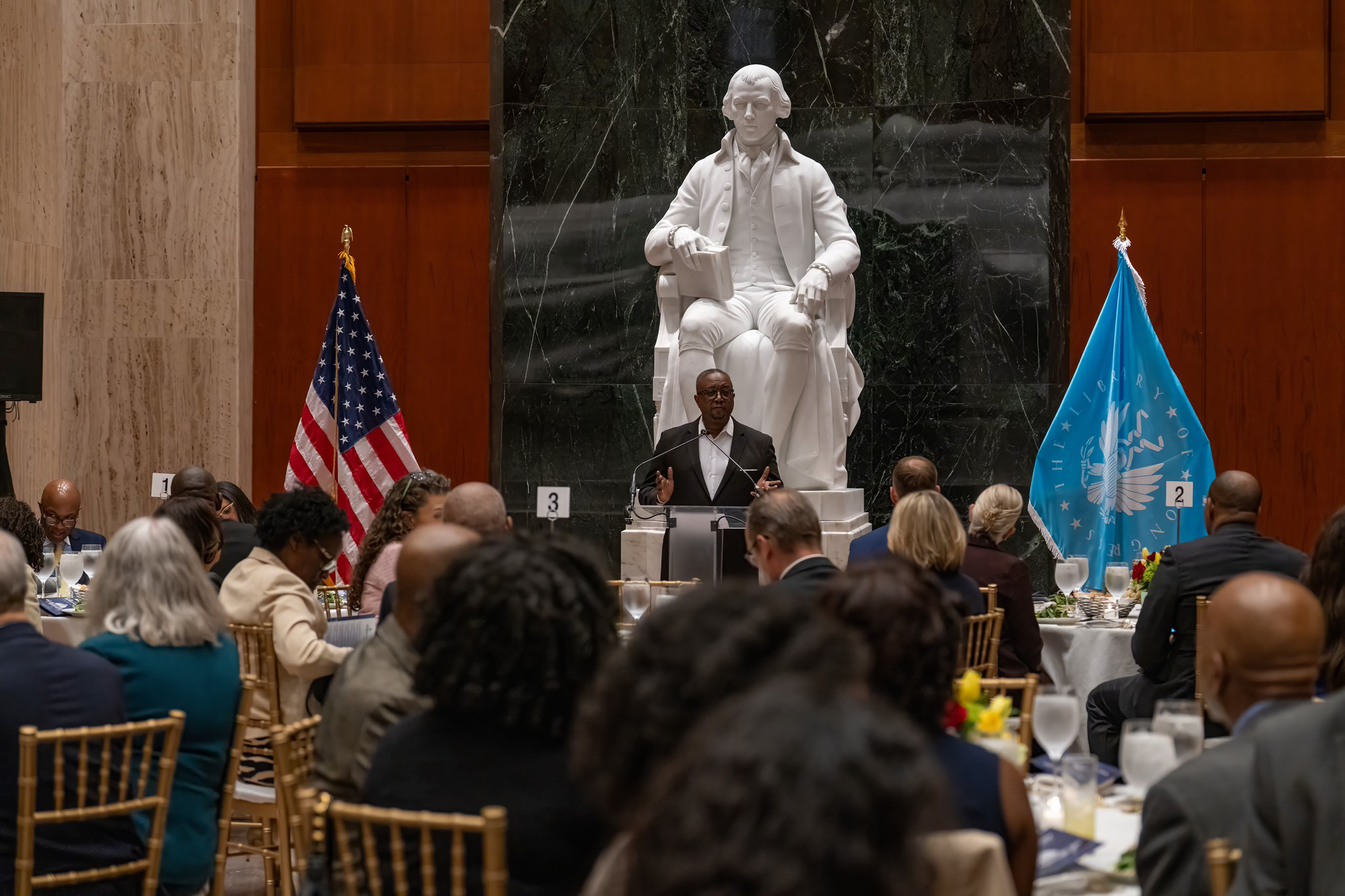
The North American Division’s (NAD) 19th annual Religious Liberty Dinner, held on April 22, 2026, in the James Madison Memorial Building at the Library of Congress, championed freedom of conscience as a core human right. Overlooking the gathering, a statue honoring Madison, the fourth U.S. president and key architect of constitutional religious freedom rights, visually reinforced the evening’s theme.
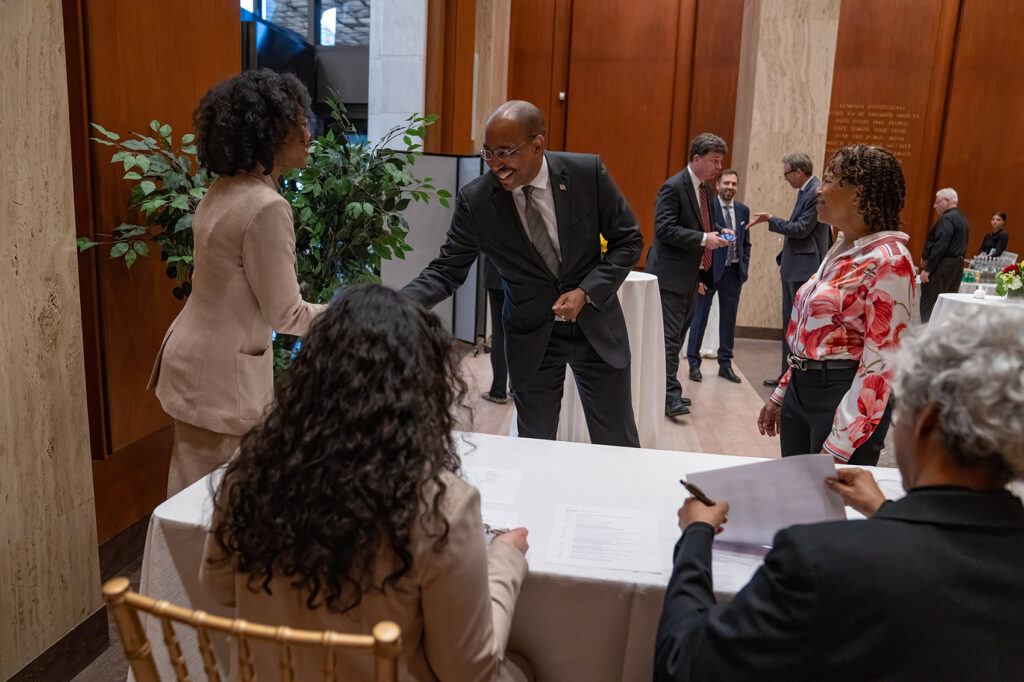
Hosted by NAD Public Affairs and Religious Liberty and Liberty magazine, the dinner brought together 90 religious liberty advocates, faith representatives, government officials, academics, Washington Adventist University honors students, Seventh-day Adventist Church leaders, and other guests.
In his welcome, Orlan Johnson, NAD PARL director, underscored the significance of the gathering. “For nearly two decades, this event has served as a space where people of diverse beliefs, backgrounds, and perspectives can come together in unity,” he said.
Johnson reminded attendees that, globally, many people do not have the freedom to worship — or not worship — as they see fit, ending with an appeal for ongoing advocacy: “Let tonight be more than a dinner.”
Celebrating 120 Years of Liberty Magazine
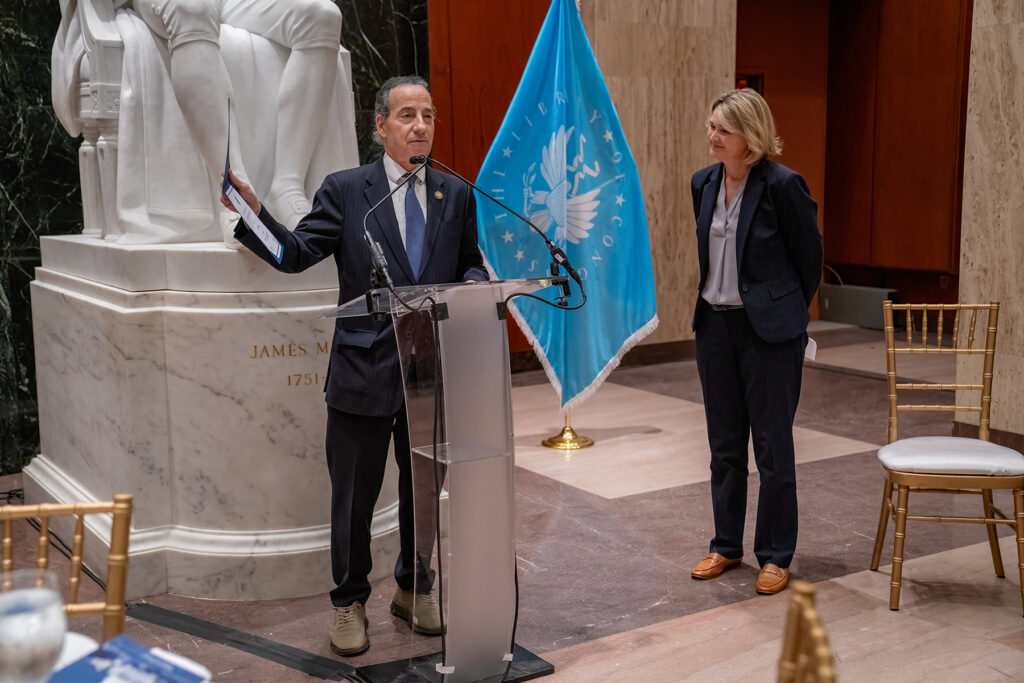
A highlight of the evening was the official recognition of the 120-year anniversary of Liberty magazine by U.S. Rep. Jamie Raskin, who represents Maryland’s 8th Congressional District. Notably, the magazine was founded in Takoma Park, Raskin’s hometown and part of his congressional district.
In brief remarks, Raskin praised Liberty magazine for helping keep alive what he called “the founding and most revolutionary principle of our Constitution” — the separation of church and state. He then presented Bettina Krause, Liberty editor and NAD PARL associate director, with a certificate honoring the magazine’s “120 years of zealously championing the separation of church and state, the precondition for freedom and progress in American life.”
Accepting the citation on behalf of the PARL team, Krause shared that when she came into the role in 2021, she “made a rash and naïve vow” to read every issue of the magazine ever published. She made it to 1940. Nonetheless, Krause discovered a lasting statement written by the editor in the very first issue: “We believe that there is no power but the power of love that can rightly compel the human conscience.”
More than a century later, Krause said, those words still reflected the shared commitment to freedom of conscience and human dignity that had brought the group together that night. “We are proud to continue the legacy … as together, we defend and promote religious freedom for all people, no matter what they believe or don’t believe,” she concluded.
Honoring Advocates Across Faith Traditions
Organizers also honored two religious liberty advocates whose work and partnership with the Seventh-day Adventist Church and other faith groups exemplify the interfaith collaboration NAD PARL espouses.
Melissa Reid, NAD PARL associate director and associate editor of Liberty magazine, first presented a Religious Freedom Advocacy Award to Galen Carey, vice president of government relations for the National Association of Evangelicals. Reid noted his advocacy on religious freedom and other public policy issues. She also highlighted his work in refugee resettlement, including supporting individuals fleeing religious persecution and, at times, hosting refugees in his own home.
In his acceptance speech, Carey cited religious freedom as “a very precious gift from God.” He added, “God does not force us to believe,” asserting that when one power dominates, whether religious or secular, persecution often follows.
He then thanked fellow advocates for their shared work in defending freedom of conscience worldwide and urged them to “lead by example and friendly persuasion, never by force or persecution.”
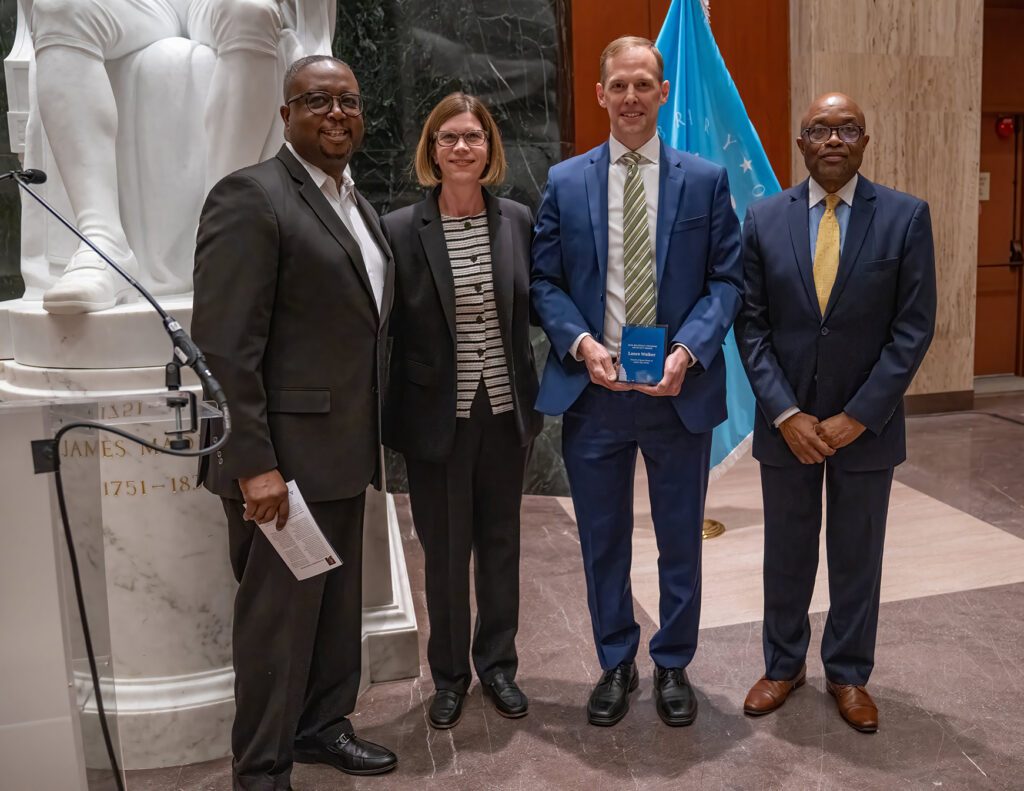
Reid later presented Lance Walker, director of the Washington, D.C., Office of Public and International Affairs for The Church of Jesus Christ of Latter-day Saints, with the same award. Among his contributions, she highlighted extensive religious freedom policy work with other faith groups, including the 2019 Fairness for All effort and the 2022 Respect for Marriage Act.
She closed by sharing what Walker considered the best career advice he had ever received while working in an often-divisive Capitol Hill environment: “It’s hard to hate up close.”
Walker, in turn, expressed gratitude for his close association with the Seventh-day Adventist Church. Drawing from the tenets of his own faith tradition and Adventism, he emphasized shared values such as freedom of conscience, respect for others, and limited government interference in religion.
Finally, Walker noted the apt choice of venue, given Madison’s legacy as a religious liberty hero. Quoting Madison’s “Memorial and Remonstrance Against Religious Assessments” (1785), he stated: “Religion … can be directed only by reason and conviction, not by force or violence.”
Keynote A Call for Perseverance
The evening concluded with a keynote address by Hakeem Jeffries, United States Representative for the 8th Congressional District of New York and Democratic Leader of the House of Representatives.
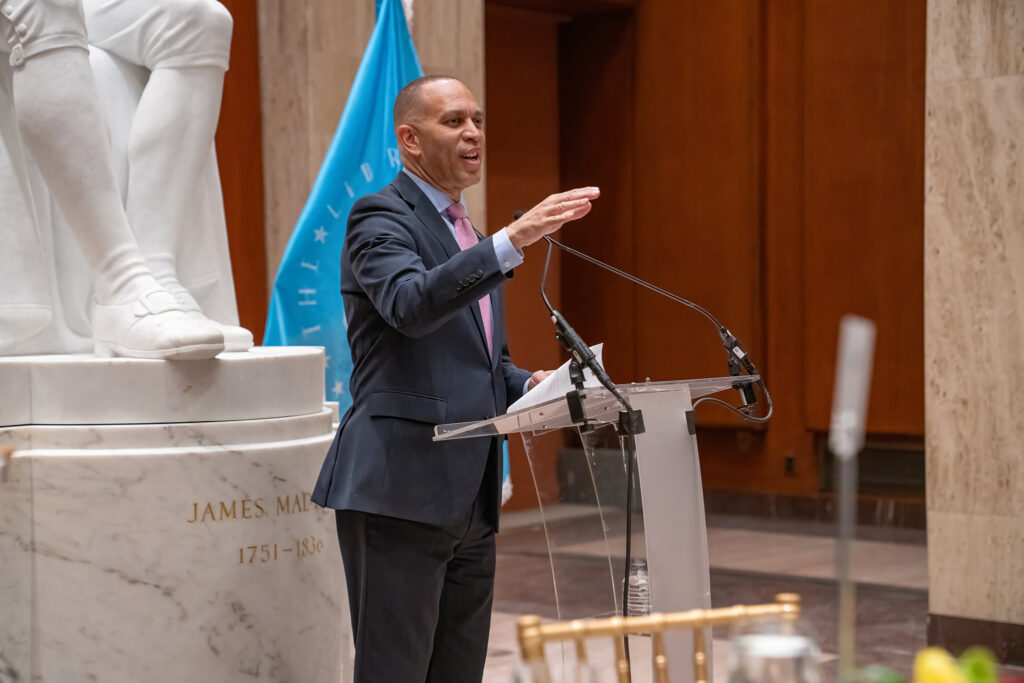
Jeffries began by thanking the Seventh-day Adventist Church for its “tremendous tradition of protecting religious freedom and liberty for people of every faith and for the secular community.”
Citing the nation’s founders, Jeffries referenced the First Amendment’s protections for religious liberty: “Congress shall make no law respecting an establishment of religion or prohibiting the free exercise thereof.” He encouraged attendees to continue upholding those fundamental values.
Finally, while acknowledging ongoing threats to religious and other fundamental freedoms, Jeffries closed with a call for perseverance: “You can’t get from your point of departure to your point of destination without at some moment along the way encountering turbulence.”
Reflecting on the evening, NAD President G. Alexander Bryant praised the PARL team for organizing “an inspiring evening” and a “tremendous night for our church.” He added that religious liberty is “not only important to our church” but also “important for humanity,” noting that God created human beings with freedom of choice.
Bryant concluded with a sentiment that affirmed the evening’s broader message: “We have to stand on the wall to protect those rights.”