When the day of Pentecost had fully come, the believers gathered together in one place. They were united in purpose and expectation. Acts 2:1 reads, “When the Day of Pentecost had fully come, they were all with one accord in one place” (NKJV).
It was not an accident, a coincidence, or a spontaneous spiritual outburst. It unfolded according to God’s precise and purposeful timing.
Pentecost comes from the Greek word pentēkostē. It means “fiftieth” and marked the completion of seven weeks plus one day following the Feast of Unleavened Bread. Of all the Jewish festivals, it drew the largest number of pilgrims from across the world. Travel conditions made this season the most accessible, and Jerusalem filled with worshipers from many nations. There was no other moment when an outpouring of the Spirit could have had such immediate and far-reaching impact. What appeared to be a religious celebration was a divine appointment.
Pentecost was both backward-looking and forward-looking. It was a time of gratitude for deliverance from Egypt and, at the same time, a moment pointing toward the liberty found in Christ. When the day had “fully come,” it signaled that God’s plan had reached its appointed time.
The disciples had lived through emotional extremes. They watched Jesus die, rejoiced at His resurrection, and spent forty unpredictable days encountering the risen Lord. Just as their confidence settled, they saw Him ascend. Before leaving, Jesus told them to wait for the promise.
His ascension was not an ending. It was a signal. As Christ was inaugurated in heaven, the Holy Spirit was poured out on earth. Heaven and earth moved together. Pentecost declared that Christ’s work was complete and that His followers were now empowered to move forward in God’s mission.
What makes this moment remarkable is not only the power, but the people who received it. Acts tells us they were “with one accord.” But unity did not mean sameness.
That upper room was filled with difference. Peter, James, and John were there, men who had openly argued over position. Thomas, who struggled to believe, was present. Those with strong faith stood alongside those with questions. Mary and other women were in the room. A former tax collector who had cheated his own people was there. These were not strangers; they were people who had walked with Jesus for years and still did not always understand Him.
Only days earlier, they had failed a crucial lesson. When Jesus rose from the table to wash their feet, none of them volunteered. His act of humble service exposed their pride and redefined leadership. Yet that same group, shaped by failure and grace, gathered again. This time, they were with one accord.
Unity is not the absence of difference. It is not uniformity. It is not everyone thinking, speaking, or acting the same way. Biblical unity is a shared commitment to God’s mission that honors diversity rather than erasing it. It recognizes that difference is not a weakness in the body of Christ, but a strength.
Pentecost reminds us that God does not homogenize His people. He unites them. When many voices come together in one accord, the church is prepared to serve God faithfully, not in some distant future, but in this very moment. God has been shaping His people for this season all along.
That truth matters now. God has shaped a church marked by extraordinary diversity in a deeply polarized world. God is calling His people to model something the world struggles to live out, such as unity without uniformity, commitment without conformity, and service grounded in love.
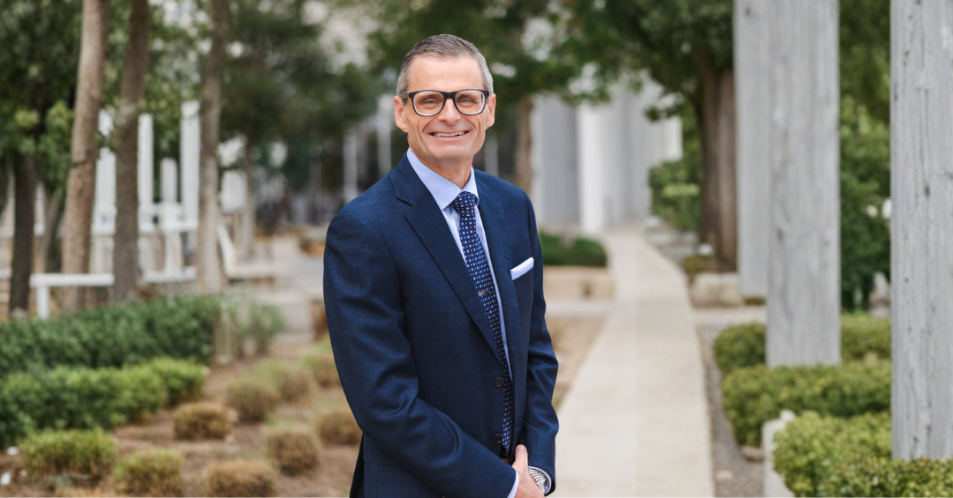
G. Alexander Bryant is president of the North American Division of Seventh-day Adventists.