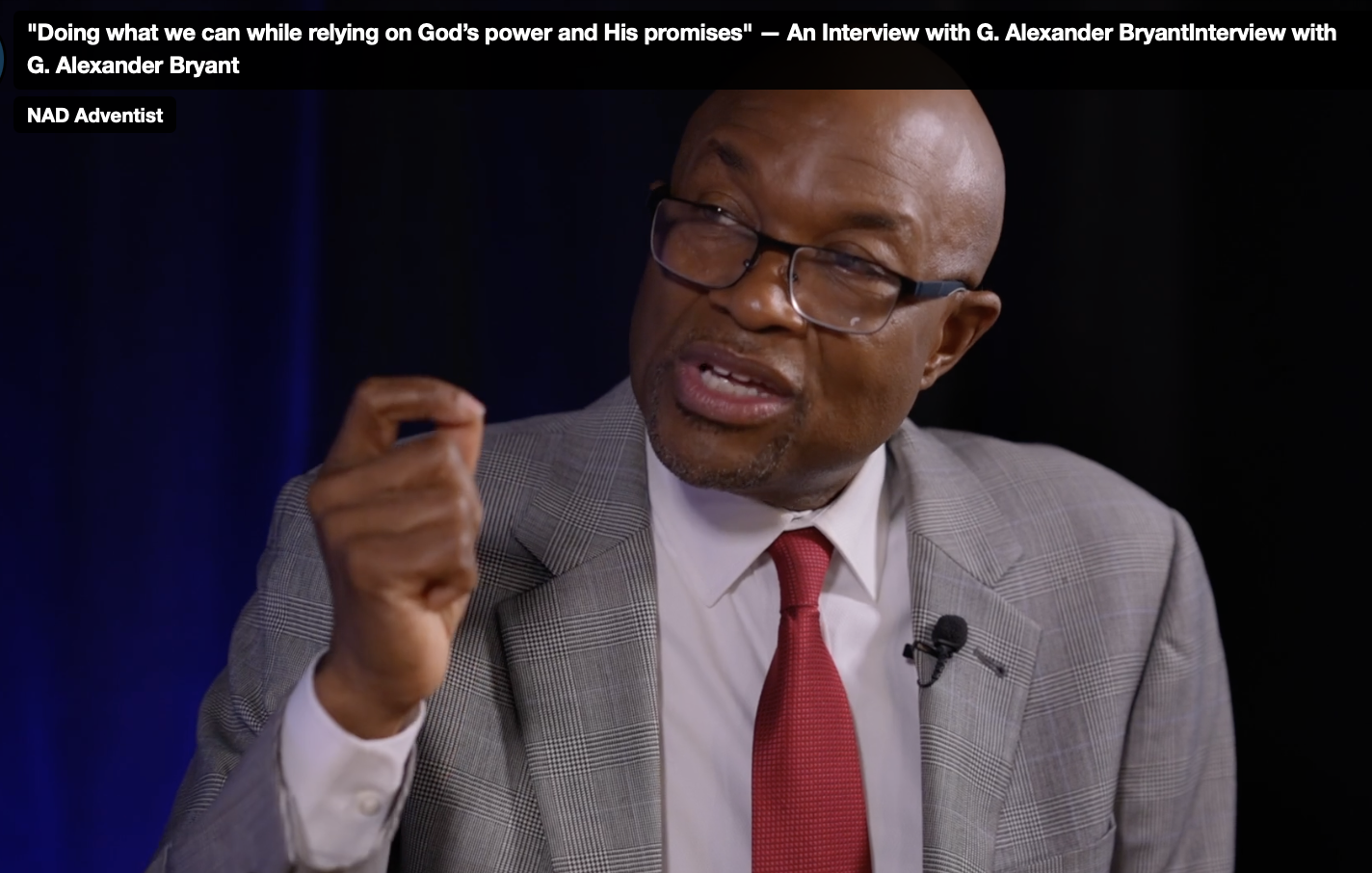
In late winter 2026, G. Alexander Bryant, president of the North American Division of Seventh-day Adventists, spent some time visiting different local churches and conferences. The following interview occurred after his trip to Minnesota; the interview transcript below has been edited for clarity and space.
Kimberly Luste Maran: Pastor Bryant, you clearly have a pastor’s heart, and you recently spent time with a group of people who are feeling afraid and uncertain. Please share with us what that experience was like.
G. Alexander Bryant: I was with a group of leaders near the end of January from across the division, and we began talking about some of the fears people are experiencing from Sabbath to Sabbath. Members are hesitant to come to church, to send their children to school—some are even afraid to go to the grocery store or to work. They’re feeling isolated and alone.
We talked about what we can do to provide support and give them a sense of hope—that God is still with us. Not only that, but that we stand together in support of those who feel especially isolated, lonely, and discouraged during this time.
I was surprised at how widespread these feelings are across our nation. But I also came away with a real sense of hope and optimism—that there is something we can do to help in this moment.
At the initial meeting, they told me, “We don’t want to deal with any polarizing issues. We don’t want to deal with politics. We just want to give our members hope.” They asked if I would come and join leaders from unions, conferences, and local churches to encourage people who are feeling despair.
What struck me was that singular word: hope. What they saw—and what I believe, and what we as a church believe—is that hope can push back mountains of despair, as Martin Luther King Jr. said. The hope we have can overcome any challenge or obstacle.
So that’s what they wanted to do: come together, sing together, and remind our brothers and sisters that we stand with them. There is hope not only for tomorrow, but for today.
That’s a powerful thought—to instill hope in people who are feeling the opposite right now. In practical terms, I’ve heard you talk about being the hands and feet of Jesus, and the church as a refuge. What do you mean by that, and how can it help people in these times?
There’s a reason Jesus said in John 14, “Let not your heart be troubled. Believe in God; believe also in Me.” If I believe that, then I believe there’s something I can do right now to help lift people’s spirits not just emotionally, but in practical ways.
What do we do to share hope—and to support it? If someone is hungry, I can take them groceries. If I see someone by the side of the road, have I ever really looked them in the eye when I help them? Sometimes I’ve gone to McDonald’s and bought a meal for someone—health folks, don’t get on me—but it’s more than the food.
When you look someone in the eye, something is lifted in their spirit. What we do for people in need speaks louder than our words. Our actions reinforce our message.
Being the hands and feet of Jesus means looking for where people are hurting—where they’re in despair—and asking, “Where can I make a difference?” It may not be a big contribution. It may be something small. But even something small can bring a gleam of hope.
When you make that connection, you realize you’ve given more than a meal—you’ve given something tangible that tells them someone cares, and maybe things will be all right.
You’re recognizing their value as a person. And we’re all valuable to God, so offering that humanity and dignity is so important.
Those are the words of Jesus: “As much as you have done it to the least of these, you have done it to Me.” Jesus understood that we often classify people in different ways. But He said whoever is considered “the least” in society—that’s Him.
By identifying Himself with them, He elevates all humanity, regardless of status, background, ethnicity, gender, or immigration status. And He calls us to treat everyone with dignity, respect, and compassion.
When people are treated inhumanely, Jesus says, “That’s how you are treating Me.”
So when we ask, “Who is my neighbor?”—it’s the least of these. Who should we stand up for? The least of these.
Embedded in Seventh-day Adventist beliefs is a commitment to the dignity of all people—regardless of gender, ethnicity, social standing, or immigration status. We do not condone inhumane treatment of any group. We want our brothers and sisters to know that we see them through the eyes of Jesus—that they are children of God.
Often people ask, “What is the church doing?” But the question I ask is: What am I doing? What are we doing as individuals?
What am I doing to check on my neighbor—the 84-year-old woman who lives alone? When it snowed, did I make sure she was OK? Did I offer to shovel her sidewalk or bring her food?
What am I doing to help those who are afraid in my community?
Sometimes it may cost us something. That’s where the story of the Good Samaritan comes in. On that dangerous road to Jericho, others passed by. But the Samaritan stopped—even at personal risk—to help someone in need.
He didn’t wait for a committee. He used his own resources, cared for the man, and said, “If there’s more needed, I’ll cover it.”
That’s what God calls us to do. We must ask: What does that look like in my life today?
As a pastor who has counseled many people, what Bible texts do you hold dear that can encourage others?
When you look at the beginning of Jesus’ ministry, He quoted Isaiah, speaking about ministering to the poor, healing the brokenhearted, and helping those who are suffering and afraid.
Matthew 25 is very meaningful to me. Also Philippians 2: “Let this mind be in you which was also in Christ Jesus.” That passage calls us to be like Christ: to serve, to sacrifice, to lead as servants.
In today’s world, you’ll be criticized no matter what you do. I would rather be criticized for trying to follow Jesus.
Another encouraging passage is John 14:1–3: “Let not your heart be troubled.” And verse 27: “Peace I leave with you; My peace I give to you.” The peace God gives is unlike anything the world offers.
That’s the hope I try to share with people.
It reminds us that we are not alone—that we can claim God’s promises and trust that He is with us.
Exactly.
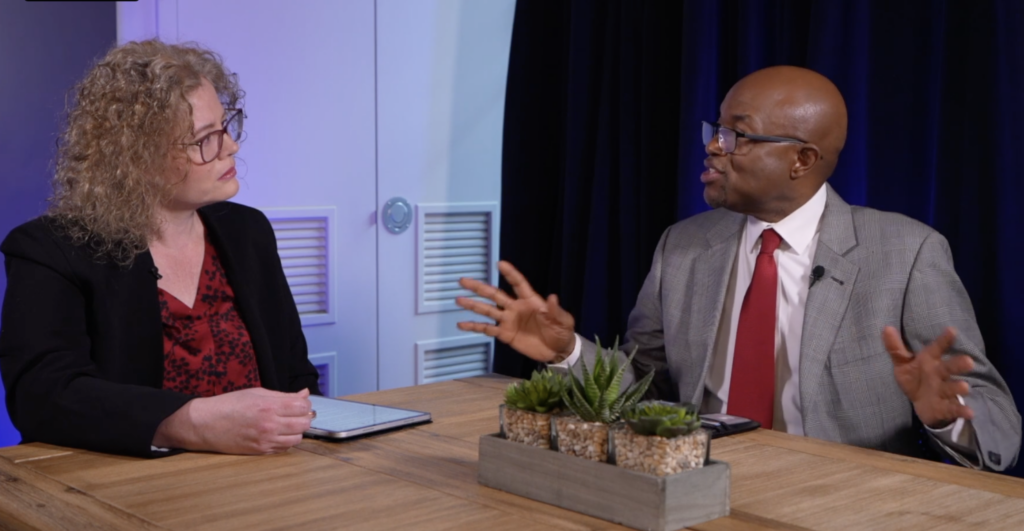
You visited Minneapolis, which has been in the news. What led you to go there?
Minneapolis had been on my heart. It became, in many ways, an epicenter of the immigration challenges our country has been facing.
At a meeting with leaders, we had a deep discussion about what the church should do in times like this. People had different perspectives, but we agreed on this: we can be the hands and feet of Jesus without entering political conflict. This is a humanitarian mission.
The secretary of the Minnesota Conference was there and invited me to come; to help lift up Jesus and bring hope. I accepted.
What I saw in the eyes of members—even legal citizens—was fear, hopelessness, and loneliness. They needed to know their church stood with them.
I also reflected on Negro spirituals and the experience of enslaved people. They lived with two realities: struggling for freedom here, while holding hope for something greater.
Songs like “Swing Low, Sweet Chariot” reflect that dual hope—freedom now, and ultimate hope in God.
That’s the message I wanted to share in Minnesota: we may face overwhelming challenges, but we must not lose sight of the hope we have in Jesus.
We do what we can here—feeding people, supporting families—but our ultimate hope is in God’s power and His promises.
Thank you very much for sharing your thoughts on the world we’re living in and the light we can be in these times. I really appreciate you taking the time to speak with me.
Thank you. … And may God guide us as we seek to do His work: to be His hands and feet and to share the hope of a better world to come.