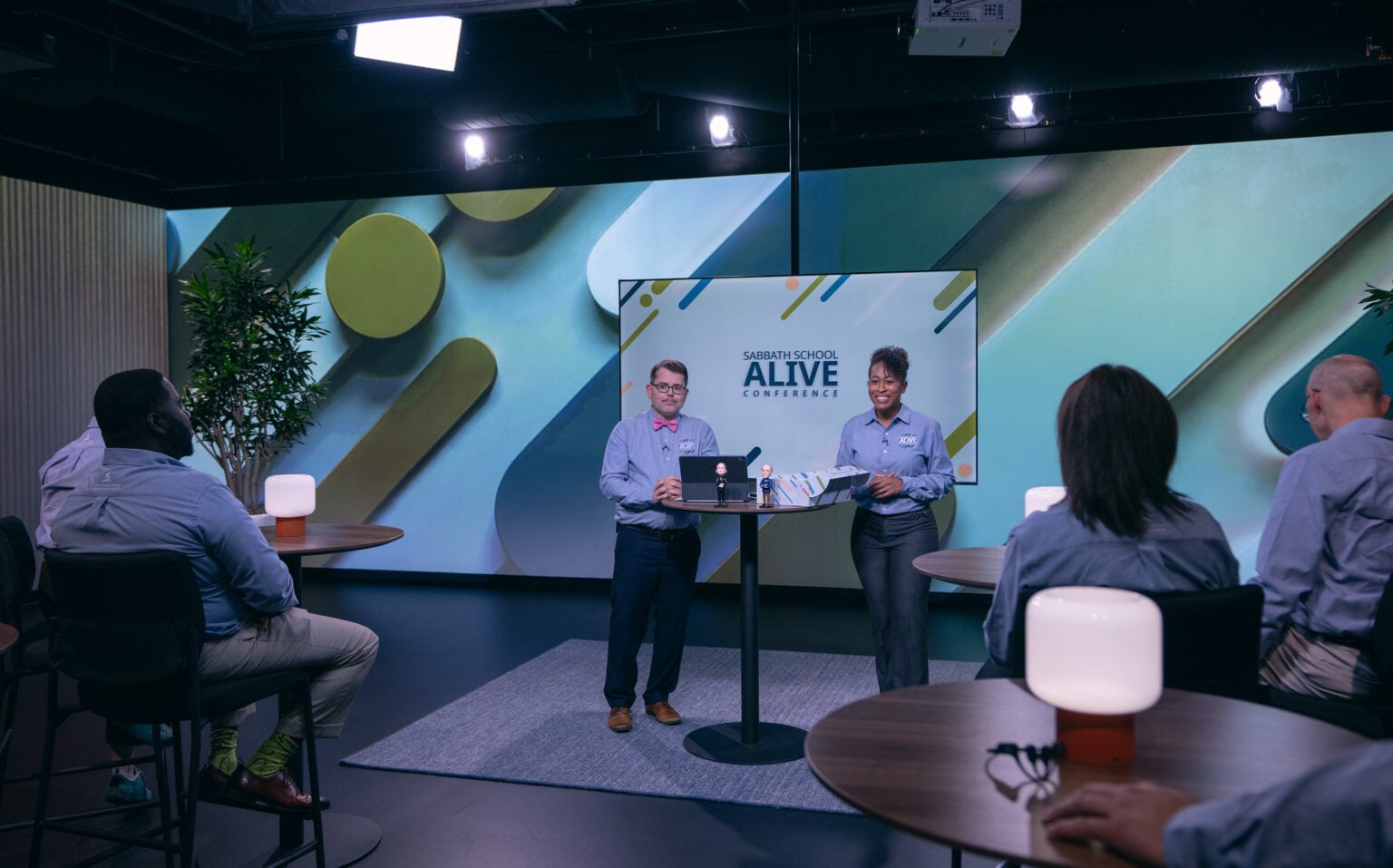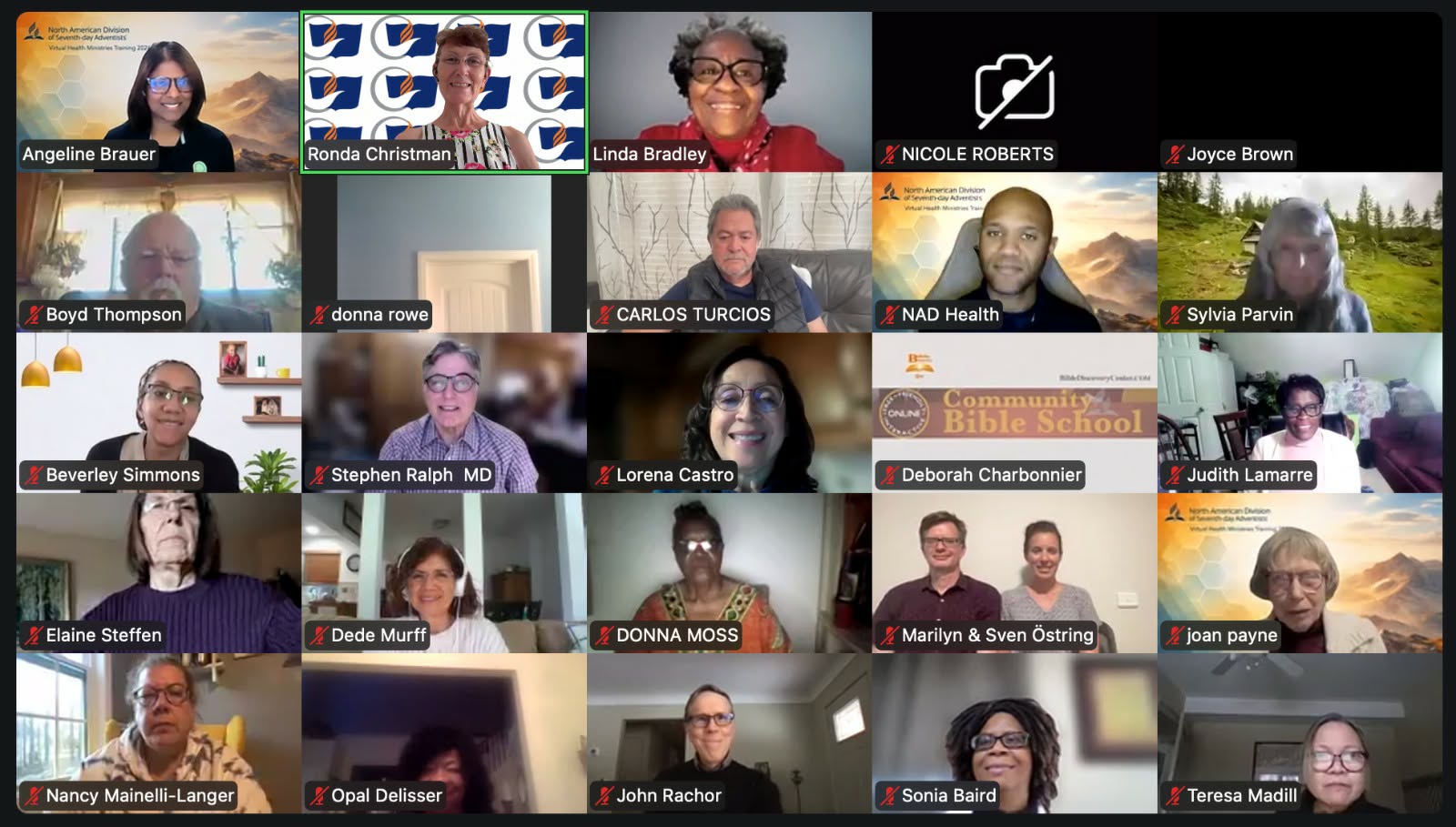
The North American Division hosted the 2026 Virtual Health Ministries Training on Feb. 20-22. More than a dozen guest speakers and nearly 150 attendees from all around the world convened via Zoom to highlight and unpack valuable principles and skills pertinent to the effective extension of the right arm of the gospel to a sin-sick world.
Friday evening and Sabbath afternoon opened with plenary sessions. On Friday, Angeline David Brauer, NAD Health Ministries director, warmly welcomed all the speakers and attendees and set the tone with a brief devotional thought. Franklin Dorsey, an administrative professional with Health Ministries, guided a period of familiarization with the different technical components of navigating through the virtual training. Kai Johnson, also part of the organizing team for the weekend, led an icebreaker to foster community and connection.
Keynote Theme
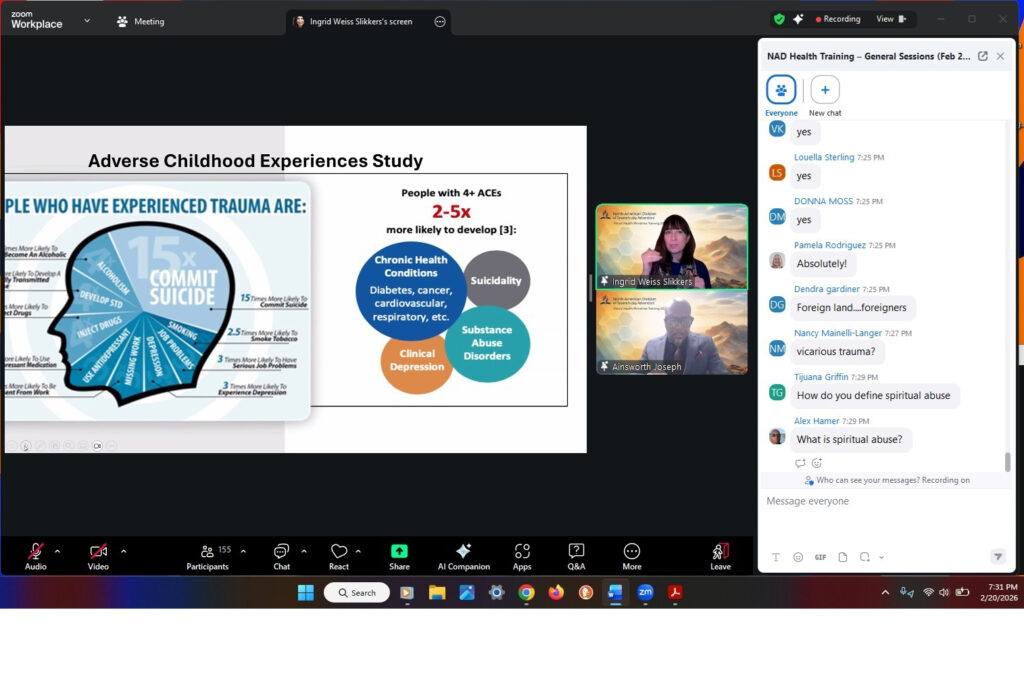
The main feature of the plenaries was a multi-dimensional presentation on “Trauma & Its Impact,” co-conducted by Ainsworth Joseph, professor of Discipleship and Family Ministries for the Seventh-day Adventist Theological Seminary at Andrews University (AU), and Ingrid Weiss Slikkers, AU professor of social work and executive director of the International Center for Trauma Education & Care.
An intriguing facet of Slikkers’ presentation was her sanctuary juxtaposition. She referenced the Sanctuary Model of Care, formulated by well-known psychiatrist Sandra Bloom. Though framed in a secular context and thus seemingly divergent from the biblical tabernacle, a backdrop of this model is the call to walk with trauma sufferers “in the middle of the mess.” As God declared His desire to dwell with His people, He pledged Himself to residing in the middle of Israel’s mess — humanity’s mess. The Lord knows proximity and intimacy are indispensable in the pursuit of healing: body, mind and soul.
Ainsworth emphasized the importance of the church becoming more trauma-informed. He candidly broached the unfortunate reality that “spiritual malpractice in trauma response” has transpired in the ecclesiastical setting, and this has included using “prayer as a crutch … hope as a bandage … [and] silence as a self-protecting mechanism.” The six pillars of a well-functioning trauma-informed church are: reflecting God’s compassionate character; creating a culture of safety and trust; honoring the whole person; embracing lament, truth-telling, and justice; fostering mutuality and healthy relationships; and cultivating hope, meaning, and resilience.
Specialized Courses
Six different courses were offered to attendees. Each registrant selected just one course and committed to participating in all 12 curriculum hours, thus earning an NAD Certificate of Training as a tangible token of achievement.
First Steps for Faith Community Nursing: This is a springboard to completing the 2024 Foundations of Faith Community Nursing program, which trains registered nurses of any faith or spiritual community to promote wellness, healing, health promotion, disease prevention and lifestyle management within the faith community. Faith Community Nurses (FCNs) provide intentional care that incorporates one’s entire being: physical, mental, emotional and spiritual. [Those seeking to become credentialed in this discipline would need to continue the education track beyond this weekend.]
The major course modules were history and philosophy of faith community nursing, spiritual care, prayer, legal considerations, documentation, and violence. A team of professionals facilitated this training, including: Joan Payne, president of the Adventist Association of Faith Community Nursing; Kathleen Coleman, prior AAFCN president; Betsy Johnson, AAFCN education director; Linda Bradly, AAFCN lead faculty; Beverly Sedlacek, board-certified psychiatric-mental health clinical nurse specialist; and Jennifer Woods, legal counsel for the Lake Union Conference.
Journey to Wholeness Facilitator: Stephen Eccles, a pastor in the Ohio Conference, and David Sedlacek, AU professor of family ministry and discipleship, teamed up to instruct this course, which trains participants in how to facilitate Christ-centered 12-step groups. It begins with a biblical overview of addiction and uses a broad definition thereof as common to all of fallen humanity. Students are oriented to addiction and its treatment and given the opportunity to experience 12-step groups. They will be equipped to provide a safe environment for individuals recovering from addictions through “journey groups” at local churches, schools, or clinics.
Health Everlasting 101: Touching Your Community through Health Ministries: With the acknowledgement that people worldwide are perishing without hope or friendship, the “gospel of health” is meant to reach their hearts and support the ministry of leading them to Jesus, the greatest Friend of all. In this class, steered by Brauer and Coleman, participants learned practical ways to reach their respective communities, become strategic in optimizing resources, and understand the science of behavior for a winsome, wholesome approach to ministry.
L.I.F.T.: Making Health Ministry More Personal with Jesus’ Way of Coaching: Rick Mautz, Health Ministries director for the Rocky Mountain Conference, directed participants on a journey through the L.I.F.T. (Listen – Inspire – Facilitate – Transform) Study Guide. The course explores the core of Christ’s ministry and the keys to experiencing success, which is less a matter of quantitative metrics and more a matter of building deep connections, demonstrating genuine care and influencing people for eternity.
Mental Health Coaching: Attendees who registered for this course learned the basics of mental health coaching and how they can parlay this into a ministry or even a career. Angela Poch, a registered professional counselor, covered key fundamentals, necessary skills and effective techniques in guiding clients to healthy emotions. Students increase their competence and confidence to work with individuals in setting mental health goals for abundant living.
Seasons of Grief Facilitator: Those who experience significant loss and carry the grief that comes with it need support from those dedicated to forming compassionate relationships with them. This class, piloted by Teresa Nelson, a registered nurse and the grief ministry coordinator for NAD Health Ministries, has been designed to equip facilitators with education, training and resources for starting and conducting a grief-and-loss support group. Upon completion, participants have been invited to connect regularly with other facilitators to share ideas and exchange support moving forward.
Attendee Feedback
During the commissioning service, attendees and speakers alike had the opportunity to reflect on the weekend, and the feedback was comprehensively positive. There were honest recommendations regarding fine-tuning logistics and other nuts-and-bolts elements of the conference, and the organizing team welcomed these graciously. Beyond that, attendees categorically appreciated the wealth of information provided and, more fundamentally, the NAD’s devotion to making this education an elevated priority within the framework of the church’s overarching mission. Accompanying people along the path of physical, mental, and emotional wellness and fulfilling the three angels’ messages are by no means separate ventures.
Alana Ferdinand, a Virginia-based business owner specializing in health consulting, heard about this training from the health ministries leader at her local church. Her excitement was instant and genuine. “I chose [the] mental health coaching [course] because it naturally fits with the work I’m already doing,” said Ferdinand. “I have a strong heart for both the elderly and children.” She was impressed by the concept of connection before correction. “People need to feel that you truly care before they can receive advice. … Even the truth, said at the wrong time, can do more harm than good.”
Stephen Ralph, a physician certified in Blue Zones and lifestyle medicine and Health Ministries coordinator for the Texas Conference, enrolled in the L.I.F.T. course. “Seventh-day Adventists have already known that a healthy lifestyle … extend[s] life by 10-14 years, but this leads to a critical question: ‘So what? How should that additional time be spent?’” He then elaborated on L.I.F.T.’s holistic approach, emphasizing the effects of diet, exercise, sleep, etc. on sound cerebral function and the ability to experience spiritual thriving.
Ralph was unequivocal about how this summit impacted him personally and professionally. “I am walking away as a more empathetic clinician, committed to listening more and speaking less,” he stated. “I look forward to future programs from the NAD.”
Theory and Practice
As mentioned, the training summit was capped off by a commissioning service. Besides the time of reflection, Brauer charged everyone to take what they learned from the “classroom” to the world. “Thank God that He has given you a purpose. … You are [health ministry] ambassadors at your local churches. … You are empowered by the Holy Spirit!” she exclaimed.
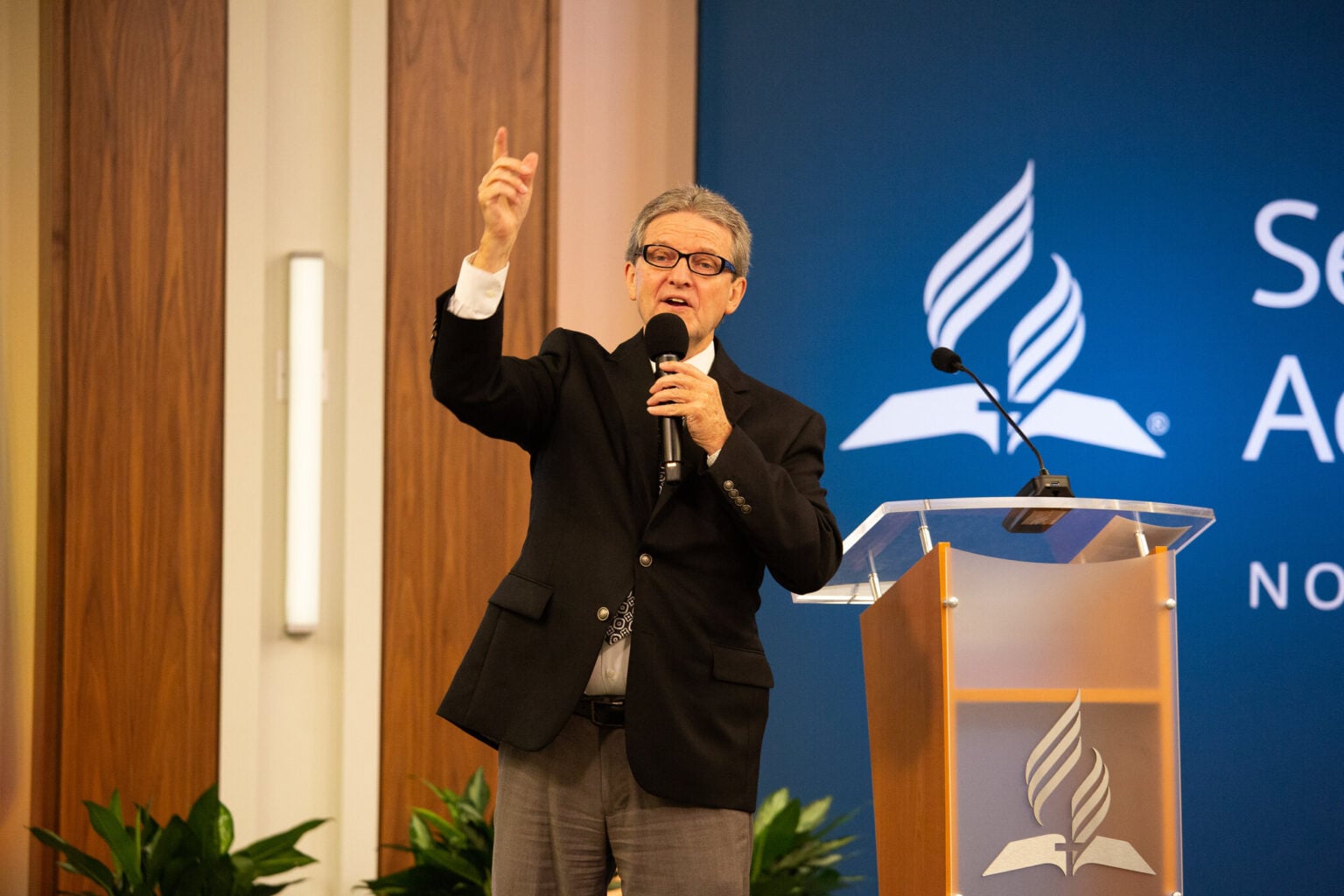
Brauer then passed the final baton to Costin Jordache, senior vice president of strategy and brand for Adventist HealthCare. His closing presentation retraced some of the principles of trauma care proffered by Joseph and Slikkers; then he introduced a fascinating new angle: translating these principles from a clinic context to a church context — from medicine to ministry. “Church has not always been a safe sanctuary,” Jordache expressed frankly before stressing several key biblical benchmarks that must undergird the church’s drive to become the refuge God wants it to be.
Organizers shared these thoughts about the event, expresing that those who took part in the NAD Virtual Health Ministries Training are not merely moving on with an expanded knowledge base, they are moving forward with a renewed vigor to implement Christ’s method alone for spreading the good news of redemption and hastening His return.
Readers are invited to visit the NAD Health Ministries website and explore all the valuable resources, including materials from prior summits, as this was the sixth of its kind.