Spanning Bermuda, Canada, Guam-Micronesia, and the U.S., the North American Division (NAD) has long been recognized as one of the world church’s most diverse regions. As NAD congregations increasingly reflect diverse languages, ethnicities, and cultures, leaders are called to create spaces where people of all backgrounds feel seen and valued.
Across the Manitoba-Saskatchewan Conference (Man-Sask), people from a range of cultural backgrounds worship, serve, and build community together. Ministry in multicultural contexts was the focus of the conference’s 2026 workers’ meeting, themed “Mission in Mosaic: Cultivating Cultural Intelligence, Discipleship, and Compassion in a Changing Landscape.”
Held January 12-15, 2026, at Burman University in Lacombe, Alberta, Canada, the gathering opened with a two-day intercultural communication training that featured speakers from the General Conference’s Institute of World Mission, NAD Missionary Services, and Tyndale Intercultural Ministries Centre in Toronto. Notably, organizers reached out to Tyndale, an interdenominational institution, to incorporate a broader Canadian Christian perspective.
Man-Sask as an International Mission Field
According to Charles Aguilar, Man-Sask president, the emphasis on intercultural communication stemmed from concerns identified through a conference-wide survey. Among the key findings, he said, was that “there are many conflicts in our church.” Additionally, church leaders and pastors identified a need for additional training and support in conflict resolution.
Aguilar and team then considered the changing demographics of both the conference’s congregations and its pastoral workforce. Congregations include members from Africa, South America, the Caribbean, Southeast Asia, the Middle East, and other regions, while several pastors are themselves immigrants to Canada.
The subsequent workers’ meeting theme was intended to help pastors recognize the mission opportunities within the Man-Sask Conference. “The basis of our meeting [was] to equip our pastors to see that missions is not [only] an overseas phenomenon,” Aguilar concluded.
Learning to See Through Cultural Lenses
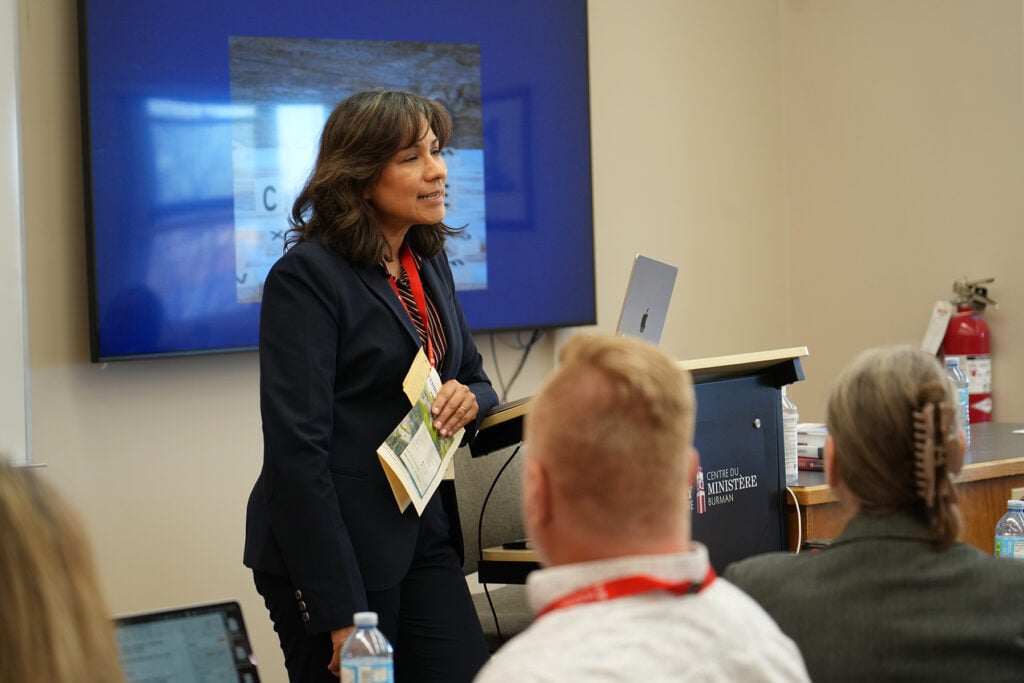
Ronald Kuhn and Mildred Castillo, associate directors of the General Conference’s Institute of World Mission, began with a full day of training on cross-cultural ministry in multicultural churches. In an introductory session, Castillo defined culture as being “like a map. It tells you how to move about in society, where you should go, and if you’re going the wrong way or the right way.” She also noted that culture includes denominational norms and practices.
Drawing from his experience as a missionary and growing up in Brazil with a German father and Latino mother, Kuhn offered a realistic view of intercultural challenges. “Cultural values you can’t force on somebody else. You have to learn what is important to them,” he reminded the group, pointing to Christ’s example of presenting grace and truth beyond cultural barriers.
The GC training integrated table discussion on topics such as different types of multicultural churches, cross-cultural mission challenges, and strategies for local contexts.
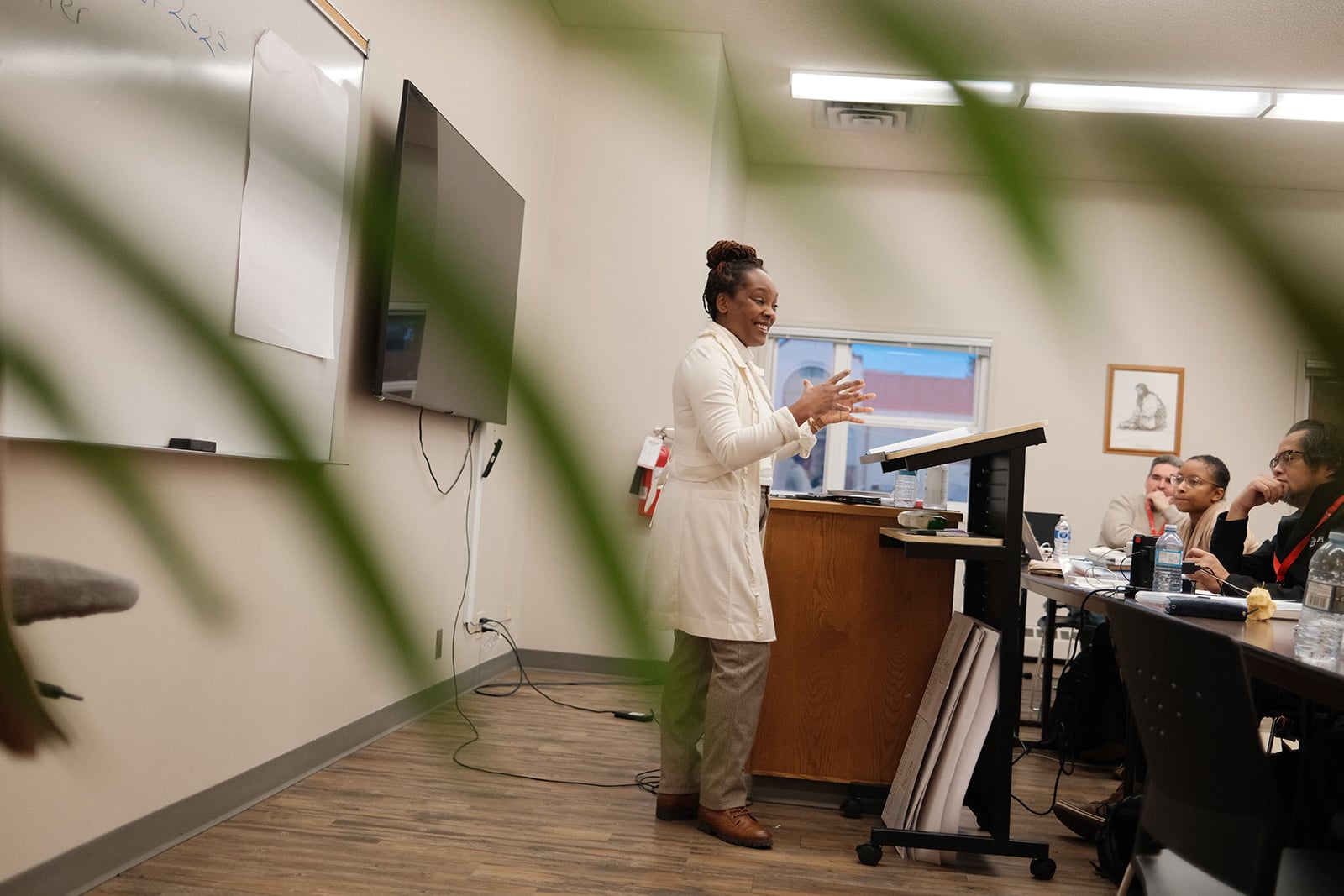
Dorothy Pang, director of the Tyndale Intercultural Ministries Centre, closed the intercultural training with sessions on leading with cultural awareness and discipleship in multicultural contexts. She distinguished between multiculturalism, where different cultures exist side by side, and interculturalism, where they interact, learn from one another, and grow.
She also provided a spiritual foundation for this work: “Developing intercultural competency is part of our discipleship to Jesus.”
A highlight was an exercise Pang led in which participants on two teams each received a picture card, described their images to teammates, then lined up in order to reveal the final story. In a debrief, participants reflected on the role of belonging, communication, humility, and leadership in solving the puzzle.
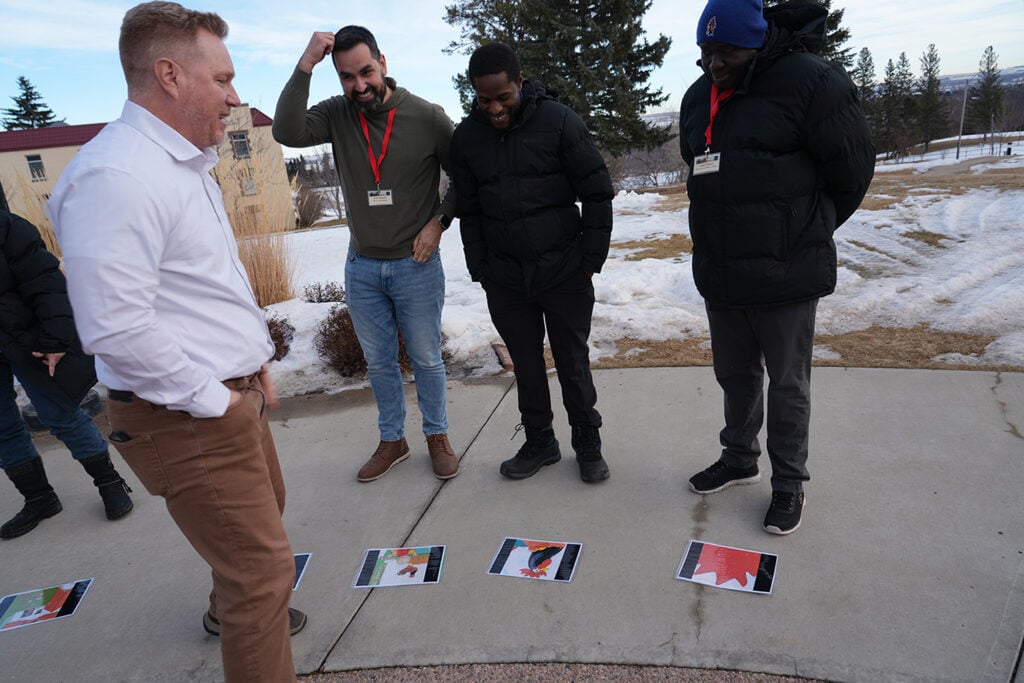
Pang connected the activity to ministry and creating spaces where everyone feels they belong. She concluded, “We need leaders in our churches who will not give up on the story — the story that we all belong in the kingdom of God.”
Infectious Mission
Devotionals offered moments of reflection and renewal. Kuhn provided the first worship thought, pointing to Christ’s example that “mission is about meeting people where they are.” Like Christ, we must be willing to set aside cultural assumptions and “eat at the Samaritan’s table.”
Continuing this theme, Orna Garnett, NAD associate secretary for Missionary Services, presented a message titled “Infectious Mission.” Using personal and biblical examples, she encouraged attendees to follow Christ’s missional model of building, healing, and teaching. She recalled first experiencing cross-cultural mission at age 16 in Antigua when Stefan, a German missionary, helped her community rebuild their church and homes after a Category 4 hurricane devastated the island. Despite a language barrier, she said, “Stefan became family,” adding, “He made it his personal responsibility to walk that journey with us.”
Garnett also referenced Nehemiah, who helped rebuild Jerusalem’s walls and restore true worship, to show that mission involves both rebuilding and healing. She ended with an invitation to invest in personal ministry, noting that opportunities to teach and witness often arise as we serve and build relationships with those around us.
She then segued into a presentation titled “Infectious Workers,” beginning with an overview of NAD Missionary Services. Since 2024, the department has provided pre-departure preparation, localized care, and re-entry support for missionaries who call North America home. Garnett briefly outlined the missionary preparation process and NAD supports.
The rest of the session used discussion prompts to explore the social and emotional frameworks shaping people’s behavior across cultures.
From Theory to Ministry
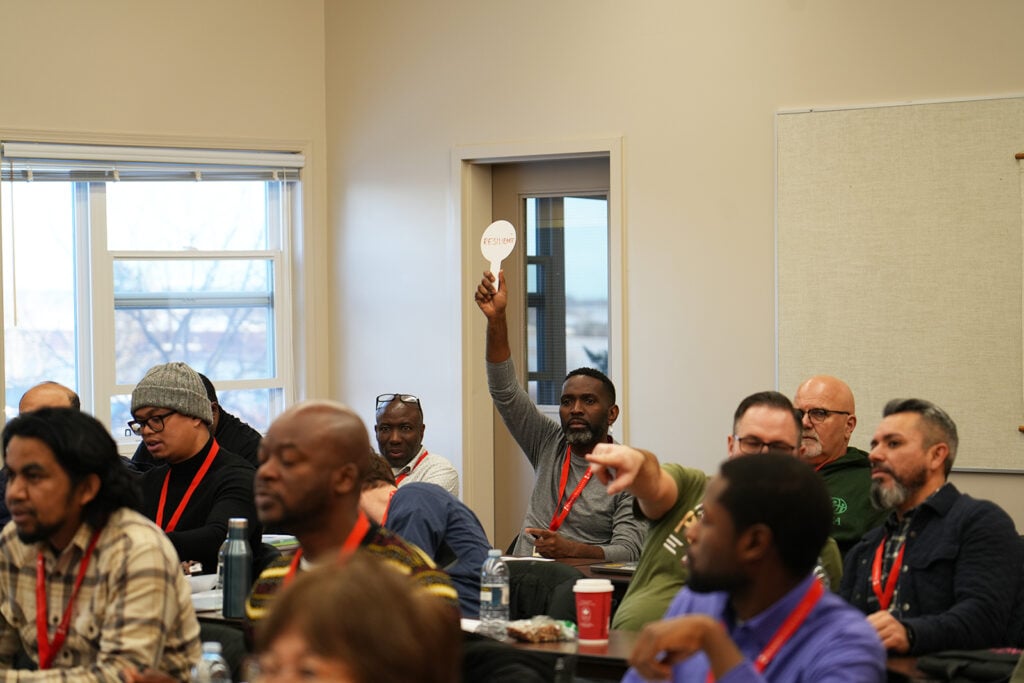
Moving beyond theory, the training provided attendees practical guidance on navigating cross-cultural communication, leadership expectations, and conflict resolution in their home churches.
Participants such as Carlos Pscheidt, who pastors a multicultural church in Winnipeg, found the training critical. “This gives us tools to teach people how to work together, even when we don’t share the same culture or when we disagree on some aspects. We can still work together and build something very beautiful,” he noted.
Reflecting on the two days, Francis Douville, Man-Sask executive secretary, viewed the training as the start of a journey. “It’s causing us to ask ourselves questions about our own behavior, rather than asking questions about other people’s behavior.”
Garnett expressed her desire for more entities across North America to engage in such training, as migration has made cultural intelligence an essential ministry skill. From her experience at the Man-Sask workers’ meeting, she believed the training would leave participants “curious, open, and willing to test the effectiveness of past ministry methods.”
She added, “Cultural intelligence is recognizing and appreciating that we can grow in our understanding of all those we call our neighbors, both locally and globally. As a church, this is who we are called to serve, to embrace, to hear, see, and understand.”