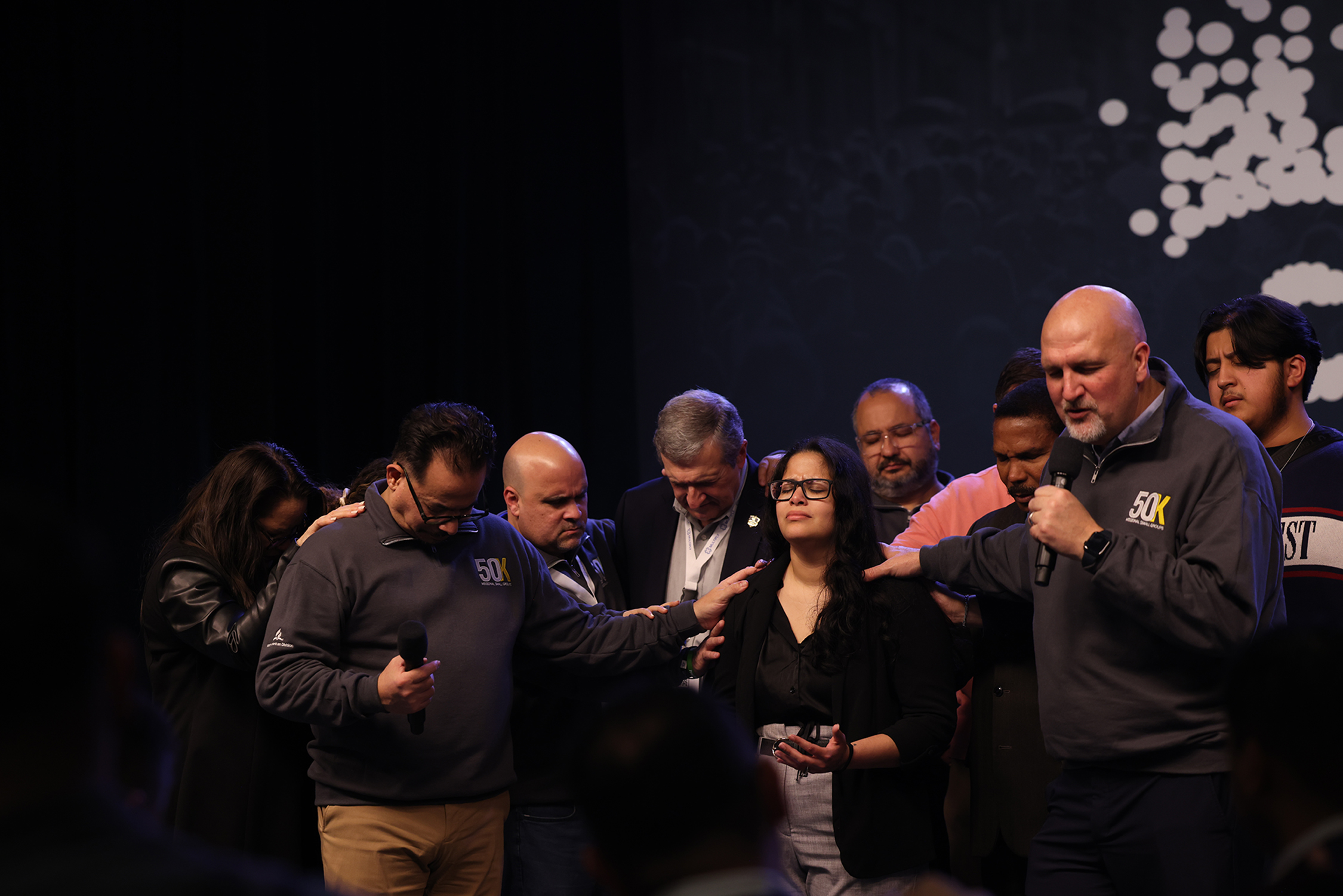
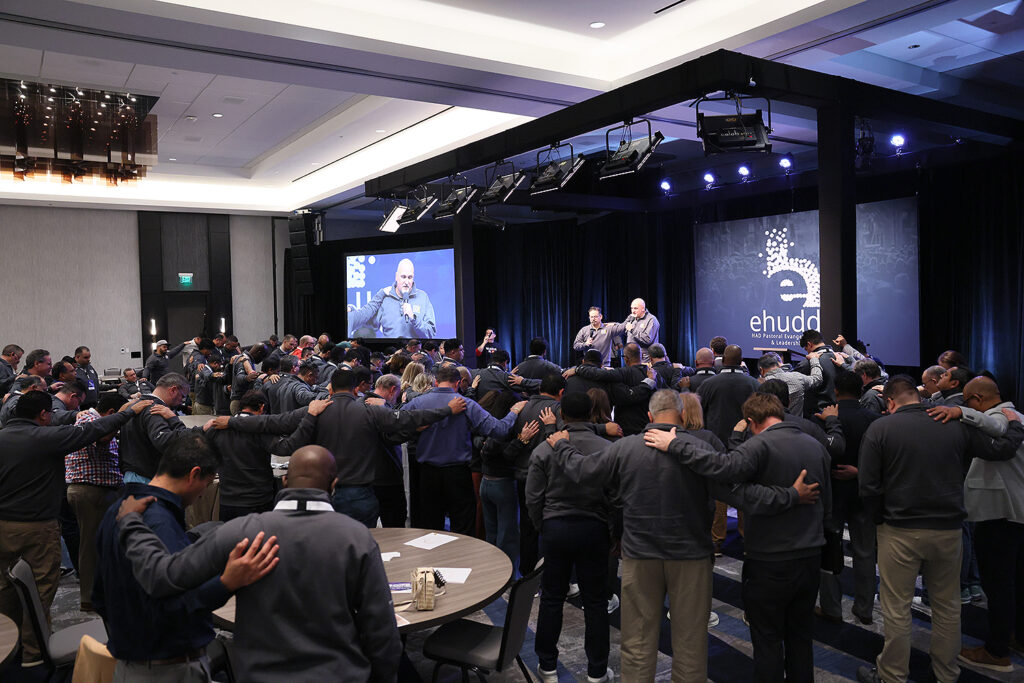
What began in 2015 as a gathering of conference presidents and evangelism directors to share best practices has grown into an annual event drawing pastors, elders, and church leaders from across the North American Division (NAD). This year, for the first time, the gathering also included 25 theology students, reflecting the NAD’s growing focus on equipping NextGen leaders. From Feb. 23-25, 2026, nearly 500 participants gathered in Houston, Texas for the largest-ever eHuddle, where they heard concise, high-impact presentations highlighting evangelism efforts already bearing fruit and initiatives designed for continued impact. Thousands more watched online.
Themes addressed across seven English-language sessions on Feb. 23 and 24 encompassed vision, the gospel, and the work of the Holy Spirit; compassion-driven evangelism, media evangelism, missional small groups, church planting, and other best practices. The English sessions concluded with a powerful altar call led by José Cortés Jr., NAD Ministerial associate director for evangelism, and a closing prayer by Gerardo Oudri, associate director for resources. A similar program was presented in a full day of Spanish sessions on February 25.
Among the creative outreach models shared were a Saturday Café hosted in their home in Alberta, Canada, by Roberson and Thaksheela Dorelus; Church Under the Bridge, a ministry led by lay pastors Geraldo and Mandy Alonso that provides food, clothing, mobile showers, and laundry services to unhoused neighbors in San Antonio; and online small groups launched by Deidre Rivera-Martin in Arlington, Texas.
The Power of Missional Small Groups
At the opening session, José Cortés Jr., NAD associate director for evangelism, introduced a new initiative to establish 50,000 missional small groups across the division by 2030. The initiative, developed at the recommendation of the pastoral evangelism advisory in 2025, draws from the biblical account of the early church, when a Pentecost harvest was followed by believers gathering in homes to break bread and grow together.
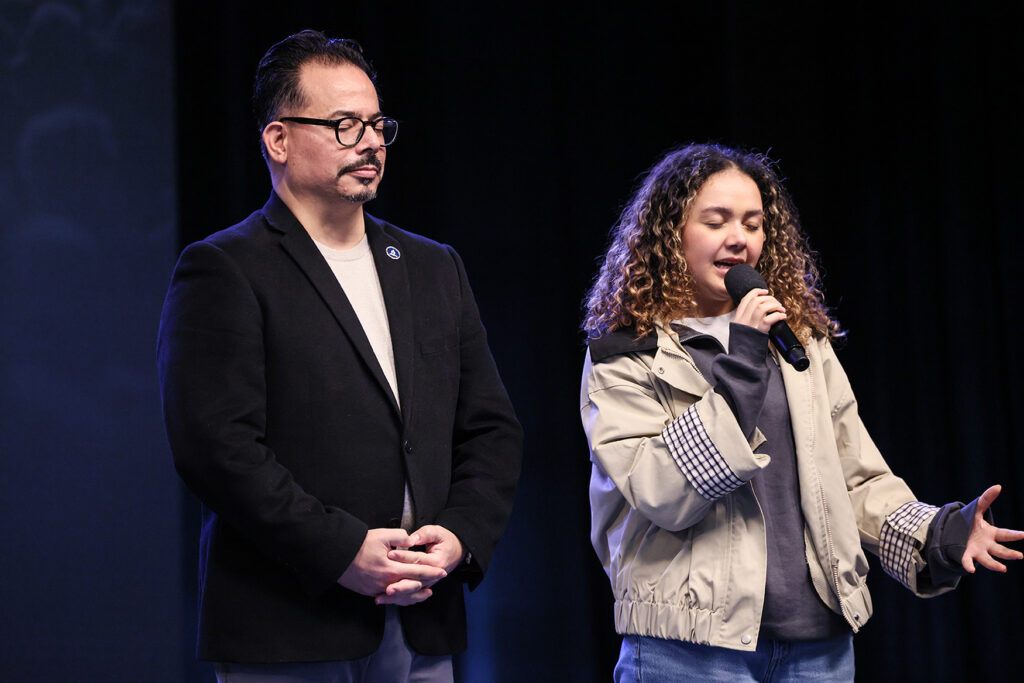
“That would help bring people to Jesus,” said Cortés, “because it’s easier to bring a friend to Jesus than to bring a total stranger to Jesus.”
In addition to supporting evangelistic efforts, Cortés said, small groups can foster authentic community, strengthen post-baptism retention, improve attendance, deepen intentional discipleship, develop leadership, spur revitalization, and multiply churches.
Presenters shared stories of small group experiences and offered practical guidance on how to structure such groups for long-term success.
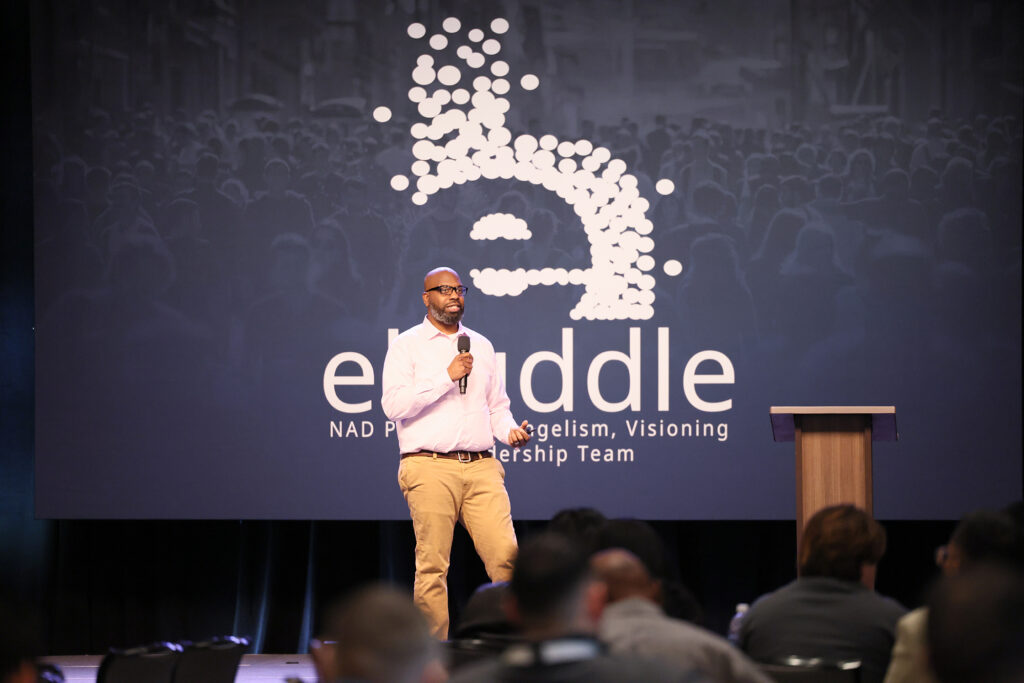
Jonathan Burnett, a pastor from Chicago, described his discouragement after a small group training he believed had failed. Unbeknownst to him, one of the eight attendees had started a small group at her workplace. Though none of the participants were Adventists, they began meeting every Sabbath afternoon in her home and later invited Burnett to join them.
“When I got into that room,” he told eHuddle participants, “I felt like the book of Acts come to life.”
“I have discovered that the Spirit of God is not limited by my limitations,” he added. “In fact, it is in my weaknesses that His strength is made perfect.”
Trusting God Through Challenge
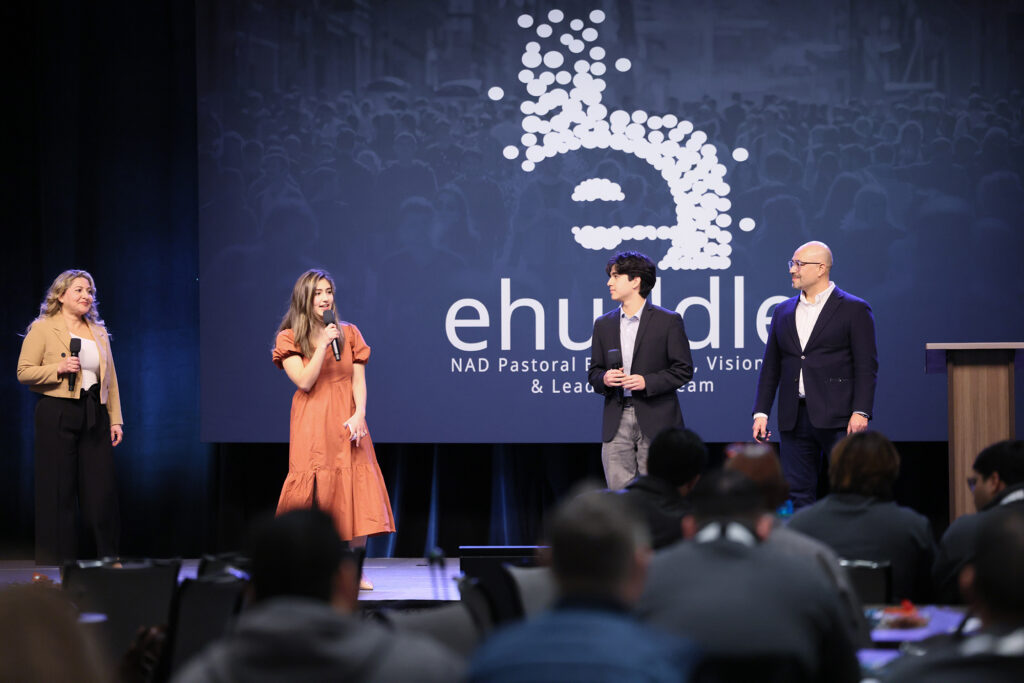
In a session on church planting, the Cancino family also shared the challenges they faced after moving to the United States to accept a call in Washington state.
“The only subject I didn’t pay too much attention to was English, because I thought I would never use it,” said Juan Cancino, the college-aged son named after his pastor father.
“We were struggling, especially with the language,” said Juliena Cancino, the family’s college-age daughter. “We felt that we didn’t belong, and the language barrier was very great.”
When the children expressed frustration about learning English, their parents responded, “You guys are going to learn this language, and you’re going to consecrate it to God.” The family then prayed together.
With his son translating, Pastor Juan Cancino recounted his disappointment upon discovering he would be pastoring churches smaller than he had expected. He committed himself to prayer and began visiting members. Over time, the congregations grew.
Later, when the family sensed a call to reach second-generation Hispanics, they again faced a challenge.
“We were so busy in our Hispanic communities that we didn’t speak English,” said Carly Cancino through her daughter’s translation. “How were we going to open a bilingual church when we didn’t speak English?”
They began with four families.
“We remembered the dangerous prayer that we prayed, when we said we were going to consecrate this language to the Lord,” Carly said. “And now [our children are] preaching in English!” she said, noting that translating their parents’ sermons has trained them as preachers.
“Look what God did with us,” young Juan added. “We never imagined learning this language, and now He’s using this new language He gave us as part of His ministry.”
The theme of trusting God through challenges surfaced in several other presentations.
Attendees were moved by Naraya Omar’s journey in ministry after overcoming the loss of her parents, teen pregnancy, divorce, addiction, mental health challenges, and spiritual unmooring. After exploring other religions, she felt a pull back to the faith and calling her father — a convert who planted five churches — had passed on to her.
When her home church rejected her, she said, “God Himself found me.” While giving Adventism “one more try,” she visited a new church plant, BELOVE, in D.C. Inspired by its welcoming atmosphere, she and a friend launched Safe Haven, a small group for young adults, “outcasts like us” in Northern Virginia. Several group members came to Christ and are discipling others. Safe Haven became BELOVE Nova, a congregation led by BELOVE Pastor Joanne Cortés.
Today, Omar is an ordained elder and vocational lay pastor at BELOVE Nova and is completing her master’s to become a pastor. “I learned that God uses anybody, clean and unclean, old and young, men and women,” she concluded.
Evangelism and Compassion
In another presentation, Ray Valenzuela and Doug Cross, pastors in the Minneapolis, Minnesota, area, shared how their church responded to recent immigration enforcement activity. Volunteers soon mobilized to support affected families with food and other essentials.
As the number of households seeking assistance grew, Valenzuela asked God how the church, which lacked a proper food pantry, could meet the need. God provided through generous donations from churches and community groups.
Several recipients requested Bibles and asked to connect with a church. The story was one of many showing that evangelism and acts of compassion are inseparable.
EHuddle participants said they appreciated the transparency of speakers who shared both victories and setbacks. “We can learn from their mistakes and their victories,” said Abraham Guerrero, a pastor from Oklahoma. “It’s more about what people are doing than what books say.”
eHuddle Replay
Click here to watch all eHuddle sessions on YouTube.
— Lori Futcher is the associate Communication director of the Southwestern Union. Additional reporting by Christelle Agboka, NAD Communication.